
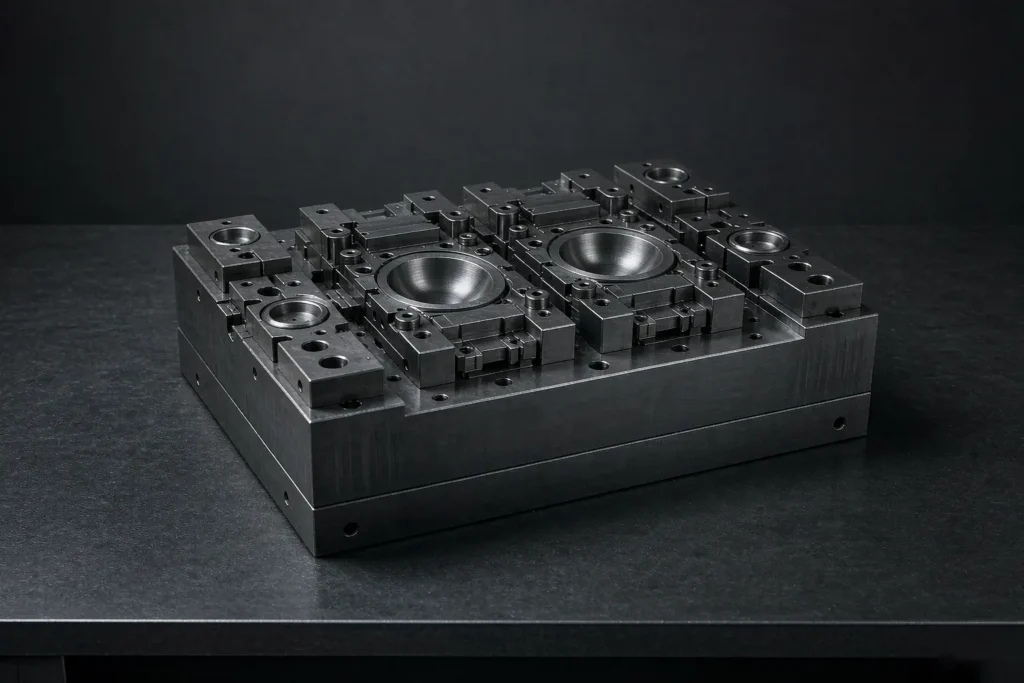
Casting tooling insurance is the clause nobody reads until a mold is destroyed and production stops. The buyer paid for the tool, the tool sits in somebody else’s plant, and the policy — if one exists at all — names somebody else as the party entitled to the claim. This guide turns that ambiguity into arithmetic: what a two-cavity die casting mold is really worth in year three, why its scrap-metal residual value is close to zero, which six contract clauses move more risk than any premium, and how to specify coverage in an RFQ before the first purchase order is signed.
Every number below is worked from one consistent example: an H13 two-cavity die casting mold with a replacement cost of $74,000, a design life of 120,000 shots, and an annual output of 48,000 pieces. The standards and industry language referenced here come from the ASTM A681 specification for tool steels, NADCA die casting tooling guidance, AIAG automotive tooling-ownership practice, and NFPA property-loss guidance — the four sources whose vocabulary actually appears in tooling schedules and insurance endorsements. If you are new to the process side, start with our metal casting guide and then come back to the commercial layer.
Why Casting Tooling Insurance Is a Procurement Problem, Not a Policy
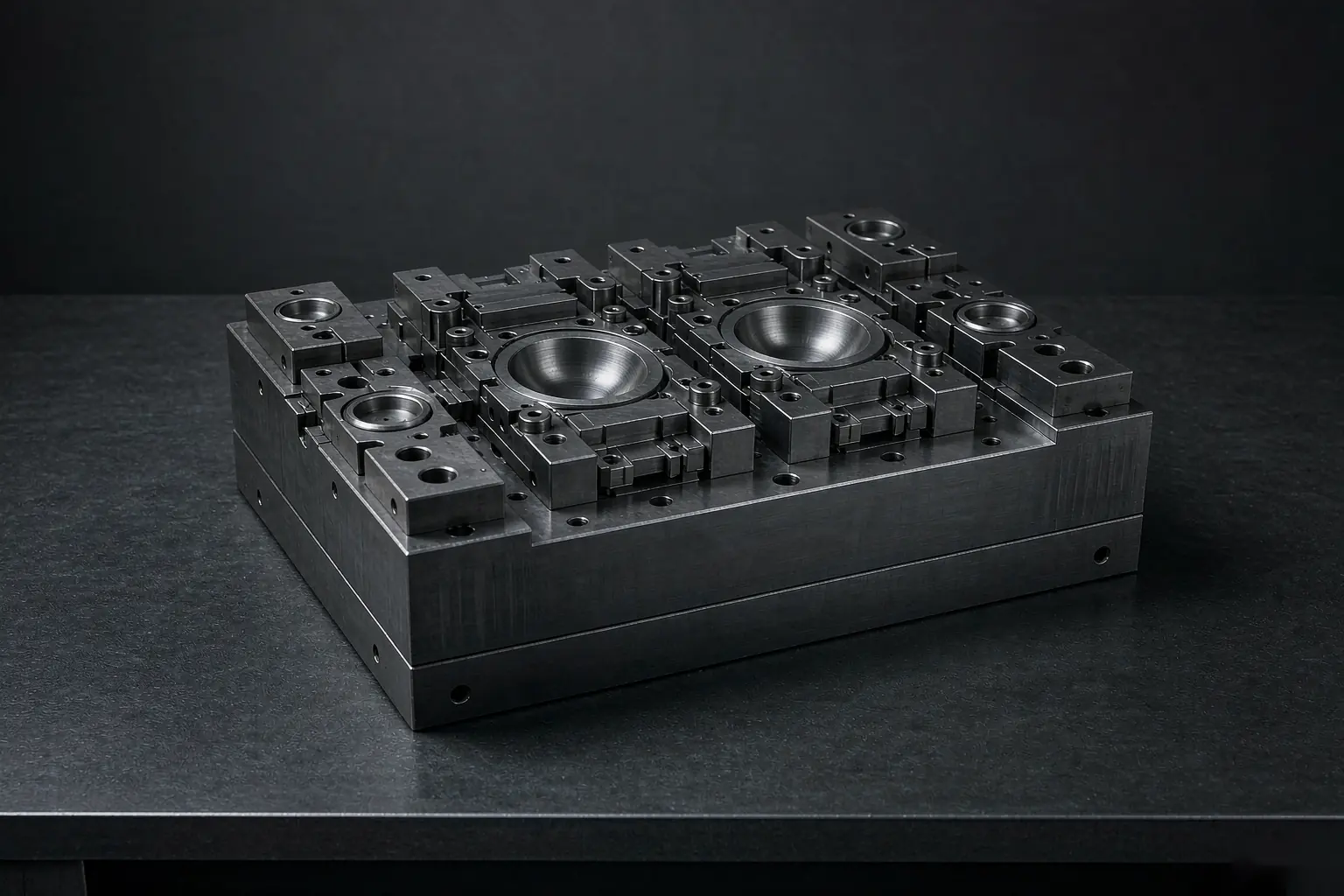
A tooling asset has three separate owners of three separate things. The buyer usually owns the physical mold because the buyer paid the NRE charge. The foundry possesses it, runs it, maintains it, and holds the process know-how that makes it produce good parts. The insurer, if a policy exists, covers the policyholder’s insurable interest — which is frequently only the foundry’s own property. Casting tooling insurance fails at the seam between those three facts, not in the fine print of any single form.
The practical consequence is that a buyer can hold a paid invoice for a $74,000 mold and still have no claim when a fire, a crane incident, or a supplier insolvency removes that mold from production. Standard commercial property policies commonly exclude “property of others” or limit off-premises property to a small sub-limit. A tooling floater (inland marine) endorsement and a named loss payee are what convert ownership into an actual recovery. Our casting tooling asset management guide covers the register that proves ownership; casting tooling cost covers how the NRE is amortised into the piece price; and the casting molds making service page describes what is physically handed over when a tool is built.
- Insurable interest. An insurer pays the party that would suffer the loss. If the foundry is the named insured and the buyer is not a loss payee, the claim cheque goes to the foundry — not to the buyer who funded the tool.
- Possession is not title. A mold bolted into a supplier’s press is indistinguishable from the supplier’s own equipment unless it is tagged, photographed, invoiced, and registered.
- Replacement is a schedule, not a cheque. Even a full replacement-cost payment does not buy back the 14–18 weeks of lead time needed to cut, heat-treat, spot, and sample a new H13 tool.
- The exposure scales with concentration. Single-source, single-tool programs have no fallback; casting dual sourcing changes the loss curve more than any deductible does.
That is why the first question about casting tooling insurance is never “how much cover”. It is “who is named, what value basis applies, and how fast can production restart”. Get those three wrong and a perfectly valid policy still leaves the buyer self-insured for the largest part of the loss.
What Casting Tooling Insurance Must Cover: Five Coverage Lines
Tooling risk does not fit a single line on a policy. Five distinct coverages touch it, and each pays a different party for a different loss. The table below is the minimum map a buyer should be able to read on a supplier’s certificate of insurance before awarding a program.
| Coverage line | What it actually pays | Typical gap for buyer-owned tooling |
|---|---|---|
| Commercial property | Damage to the policyholder’s own buildings and equipment at a named location | “Property of others” exclusion; a buyer-owned mold in the foundry may not be covered at all |
| Inland marine / tooling floater | Scheduled tools wherever they sit, often at agreed value | Only works if the specific tool ID and value are scheduled and the buyer is named |
| Business interruption | Lost margin while the insured’s own operation is down | Pays the foundry’s lost margin, not the buyer’s lost production or downstream line stoppage |
| Equipment breakdown / machinery | Sudden mechanical or electrical failure of insured equipment | Wear, heat checking, and gradual cavitation are excluded — the real way a die reaches end of life |
| Product liability / recall | Third-party injury or damage from a defective casting | Does not respond to a tool being destroyed; separate from casting nonconformance |
The property-of-others exclusion in plain terms
Suppose the foundry carries a $2 million property policy with a $25,000 sub-limit for property of others. A press fire destroys two buyer-owned molds valued at $74,000 and $38,000. The sub-limit caps recovery at $25,000 across both tools, and the loss payee on that sub-limit is the foundry unless the buyer negotiated otherwise. NFPA loss data consistently shows that a single ignition event in a die casting cell rarely stops at one asset, so sub-limits calibrated to “a small customer item” are structurally mismatched to production tooling. The fix is not a bigger sub-limit; it is a scheduled tooling floater with agreed value per tool ID.
Process choice changes the exposure too. A Sandguss pattern set costs a fraction of a die casting die and can often be re-cut in days, while a Druckgussdienstleistungen program concentrates six figures of tooling into one asset with one serial number. Casting tooling insurance should therefore be specified per tool class, not per supplier.
Replacement Cost vs Actual Cash Value: The 43,956-Dollar Gap
Two valuation bases dominate tooling schedules. Replacement cost (RC) pays what a new equivalent tool costs today. Actual cash value (ACV) pays RC minus depreciation. Insurers prefer ACV; buyers need RC. Using the $74,000 mold, a five-year straight-line schedule, and a nominal 1% salvage floor of $740, the annual depreciation charge is $14,652. The table shows what happens if the tool is lost at the end of year three — a very common point in an automotive program life.
| End of year | ACV payable | Replacement cost | Shortfall vs RC | Shots remaining | Remaining-capacity value |
|---|---|---|---|---|---|
| 0 (new) | $74,000 | $74,000 | $0 | 120,000 | $74,000 |
| 1 | $59,348 | $74,000 | $14,652 | 100,000 | $61,667 |
| 2 | $44,696 | $74,000 | $29,304 | 80,000 | $49,333 |
| 3 | $30,044 | $74,000 | $43,956 | 60,000 | $37,000 |
| 4 | $15,392 | $74,000 | $58,608 | 40,000 | $24,667 |
| 5 (end of life) | $740 | $74,000 | $73,260 | 20,000 | $12,333 |
How the schedule is calculated
ACV at year three is 74,000 minus three times 14,652, or $30,044. Rebuilding the tool still costs $74,000, so the buyer must fund a $43,956 shortfall — 59.4% of the replacement cost — out of operating budget. Meanwhile the tool still had 60,000 shots of usable life, worth $37,000 on a pro-rata replacement basis (74,000 multiplied by 60,000/120,000). The ACV cheque is $6,956 short of even that remaining productive capacity. An ACV clause does not merely underpay; it prices the wrong thing.
Two corrections belong in the purchase order. First, specify replacement cost with an agreed-value schedule re-stated annually against a current quotation, not a fixed historical figure — steel and machining rates drift, which is the same mechanism discussed in casting price adjustment. Second, treat the tool as a capacity asset in the casting total cost of ownership model rather than as a depreciating fixed asset on someone else’s balance sheet. Feinguss wax tooling follows the same logic at lower unit values and shorter replacement windows.
Casting Tooling Insurance and the Residual Value Trap
Buyers often spend a negotiation round on “who keeps the mold at end of life and what is it worth”. That round is worth almost nothing. Take the same H13 tool: roughly 420 kg of H13 cavity and insert steel plus about 1,430 kg of P20 and carbon-steel holder block. At scrap rates of $0.55/kg for alloy tool steel and $0.28/kg for the holder, gross residual value is 420 x 0.55 + 1,430 x 0.28 = $631.40. Deduct $380 for dismantling and transport and the net is $251.40 — 0.34% of replacement cost.
Two residual values, 58 times apart
At year three, the same tool still carries 60,000 shots of capacity worth $37,000 on a replacement basis — 58.6 times its scrap value of $631.40. Casting tooling insurance that is written against book or scrap value therefore insures the smallest number in the room. The economically correct insured value is the cost of replacing the remaining productive capacity, adjusted for how much life casting tooling maintenance has actually preserved. A well-maintained die with documented shot counts, heat-check inspections and refurbishment records supports a higher agreed value than a neglected one; the paperwork is the evidence.
End-of-life governance matters more than end-of-life money. Define the shot counter, who owns it, and what triggers a replacement quote. Tie the trigger to measured capability rather than a calendar date: when casting scrap rate on that tool drifts above the agreed ceiling, or when Cpk on a critical bore falls below 1.33, the tool is economically exhausted regardless of what the depreciation schedule says. Downstream CNC machining services usually see the drift first through rising tool wear and dimensional escapes.
Ownership, Access and Replication Rights Outrank Casting Tooling Insurance
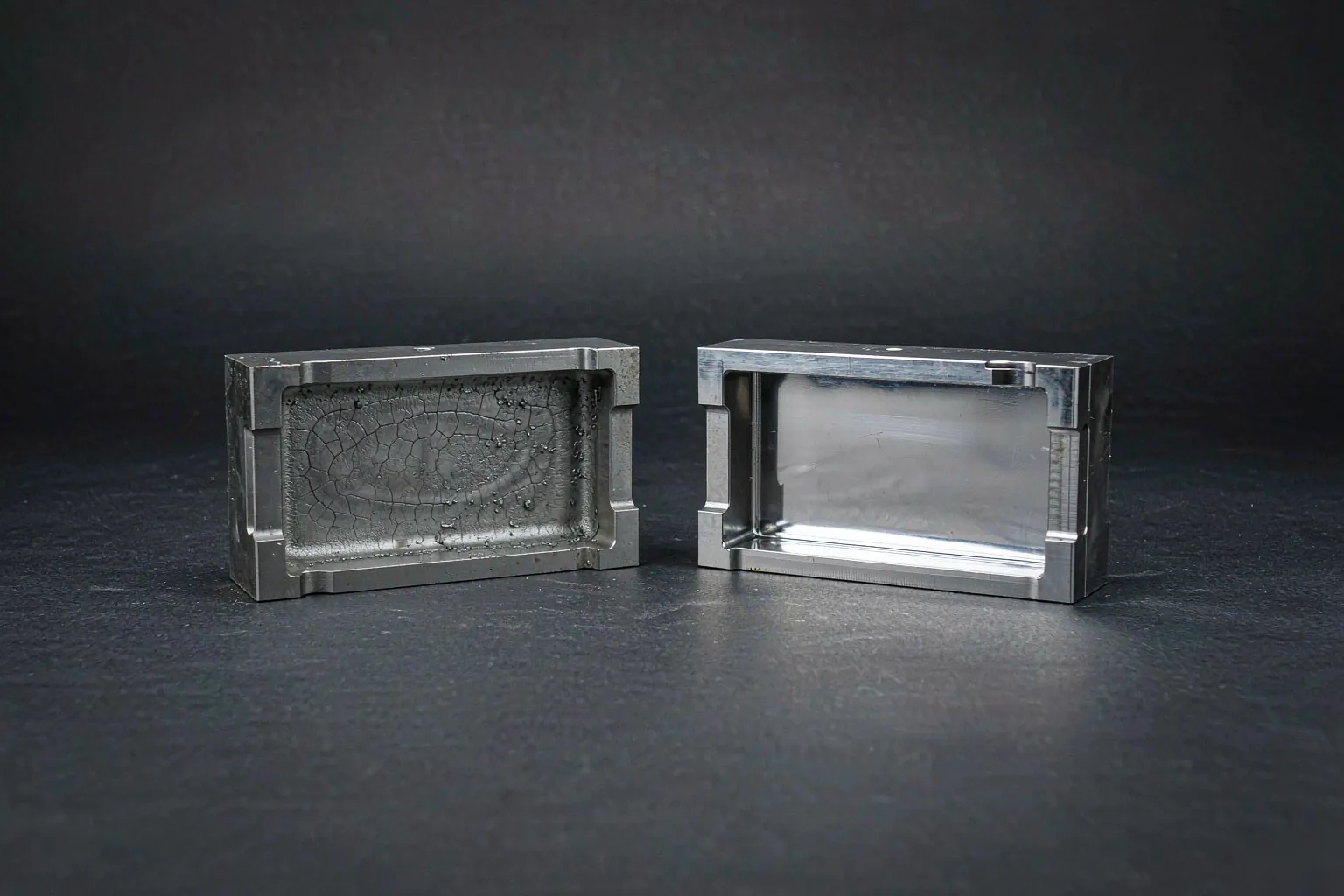
An insurance cheque replaces metal. It does not restore the ability to make parts next month. Four non-insurance rights determine whether a loss is a four-week inconvenience or a five-month line stoppage, and they cost far less to secure than any premium.
- Title and registration. A bill of sale naming the tool ID, a physical asset tag, an annual photo and location record, and any local secured-transaction filing available. Without this, a mold inside a supplier’s plant can be swept into an insolvency estate. This is the register described in tooling asset management.
- Removal and relocation rights. A 1,850 kg die plus a trial run, dimensional buy-off, and re-submission of a casting first article inspection package costs about $9,200 — 12.4% of replacement cost — and roughly three weeks. Write the right to remove the tool and a fixed removal-cost cap into the agreement.
- Technical data escrow. Full 2D drawings, 3D cavity models, steel certification to ASTM A681, heat-treatment and coating parameters, gating and cooling layouts, and the approved sampling parameter sheet. With a complete data pack, a rebuild takes about 14 weeks; without it, reverse engineering adds six to eight weeks and a fresh process-development loop.
- Replication and standby-insert rights. The right to cut a second set of cavity inserts, priced at roughly $21,000, is the single cheapest form of capacity insurance a buyer can buy.
AIAG practice in the automotive supply chain is instructive here: tooling ownership, access and data delivery are treated as contractual deliverables with their own acceptance gates, not as favours. Prototype routes such as metal prototype casting services und 3D printing prototype can validate a data pack cheaply before it is escrowed — a printed sand core or a soft-tool sample proves the geometry is complete. The casting RFQ should ask for the data deliverable explicitly, because a supplier that cannot produce a complete cavity model today will not be able to rebuild the tool quickly after a loss.
Note the priority order. Casting tooling insurance addresses one of these four exposures — the metal. Registration, removal rights, data escrow and replication rights address the other three, and they are what casting supplier audit und foundry audit checklist should actually verify during a plant visit.
Casting Tooling Insurance in the Supply Agreement: Six Clauses
Insurance wording belongs in the supply agreement, not in a separate certificate that nobody re-reads. Six clauses cover the full exposure. Each is written as a testable statement so an auditor can confirm compliance with a document rather than an assurance.
| Clause | What to write | What it prevents | Red flag |
|---|---|---|---|
| 1. Title and identification | Buyer holds title; tool ID, weight, cavity count and location recorded; asset tagged; annual photo register | Mold absorbed into a supplier insolvency estate | Invoice says “tooling charge” with no tool ID |
| 2. Insured party and loss payee | Foundry maintains a scheduled tooling floater; buyer named as loss payee for buyer-owned tools | Claim paid to the foundry instead of the buyer | Certificate lists only the foundry as insured |
| 3. Valuation basis | Replacement cost, agreed value per tool ID, re-stated annually against a current quote | ACV depreciation shortfall of up to 59% | Policy says “actual cash value” or “book value” |
| 4. Deductible and sub-limits | Deductible capped at 2% of agreed value; no property-of-others sub-limit below full agreed value | A $25,000 sub-limit against a $74,000 tool | Blanket sub-limit with no per-tool schedule |
| 5. Data escrow and removal | Full technical pack held in escrow; buyer may remove the tool within 10 days on notice; removal cost cap agreed | 18-week rebuild without geometry; tool held hostage in a dispute | CAD files “available on request” |
| 6. Notice, reinstatement and continuity | 48-hour loss notice; supplier funds interim production; replacement tool sampled to the original FAI | Buyer funds the entire ramp twice | No obligation to maintain output after a loss |
Clauses 1–4 are the casting tooling insurance core; clauses 5–6 are the continuity core. They dovetail with casting quality agreement (acceptance standards and claim windows), casting payment terms (who funds the replacement and when), and casting nonconformance (what happens when the rebuilt tool produces borderline parts). For a commodity iron casting program with cheap patterns, the full six-clause package may be disproportionate; for a single-source die casting program it is the minimum.
Three Loss Scenarios: Fire, Insolvency, and End-of-Life
The same $74,000 tool produces three very different losses. Work them before choosing a deductible. Assume 48,000 pieces per year (4,000 per month) at a contribution margin of $18.50 per piece, so a full month of lost output is $74,000 in margin — coincidentally the same number as the tool cost. A rebuild plus sampling and ramp takes 18 weeks, or 4.15 months, giving a production loss of about $307,100. That is 4.1 times the value of the metal.
| Scenario | Tool loss | Production window | Buyer cash out — no clauses | Buyer cash out — six clauses in place |
|---|---|---|---|---|
| Press-cell fire, year 3 | $74,000 rebuild; ACV policy pays $30,044 | 18 weeks (14 rebuild + 3 FAI + 1 ramp) | $43,956 gap + $307,100 margin = $351,056 | $0 tool (RC agreed) + $170,600 margin with escrowed data and a 10-week rebuild |
| Supplier insolvency | Tool tied up in estate; no registered title | 18 weeks or longer | $74,000 new tool + $307,100 margin = $381,100 | $9,200 removal + $34,100 margin over 2 weeks = $43,300 |
| Normal end of life, 120,000 shots | $631.40 scrap value | Planned changeover, 0 weeks | $74,000 replacement tool (argued as a price increase) | Replacement funding agreed in advance; shot counter triggers a quote at 100,000 shots |
The standby-insert break-even
The insolvency row is where casting tooling insurance is least useful and preparation is most valuable: title registration plus data escrow cuts the loss from $381,100 to $43,300, a difference of $337,800. A standby set of cavity inserts costs $21,000 and reduces a total-loss outage from 18 weeks to roughly 2 weeks, cutting margin loss from $307,100 to $34,100 — a saving of $273,000 per event. The break-even annual probability of a total loss is therefore 21,000 / 273,000 = 7.69%. At a 1.2% annual event rate the expected benefit is $3,276 per year and payback is 6.4 years; at a 4% rate — old plant, single source, no sprinkler protection — it is $10,920 per year and payback is 1.9 years. This is the same expected-value structure used in casting capacity reservation und dual sourcing decisions.
Lead time is the hidden multiplier. Casting lead time analysis shows that a rebuilt H13 tool is not the only queue: steel procurement, heat treatment services, tryout press availability, and surface treatment services all have their own slots. A buyer who has escrowed the data pack can parallel-order steel and coatings on day one; a buyer who has not starts a six-week reverse-engineering loop before any of those queues even opens. Disputes about who pays are then handled through casting defect claim und casting incoming inspection plan evidence rather than assertion.
Casting Tooling Insurance Checklist for Your Next RFQ
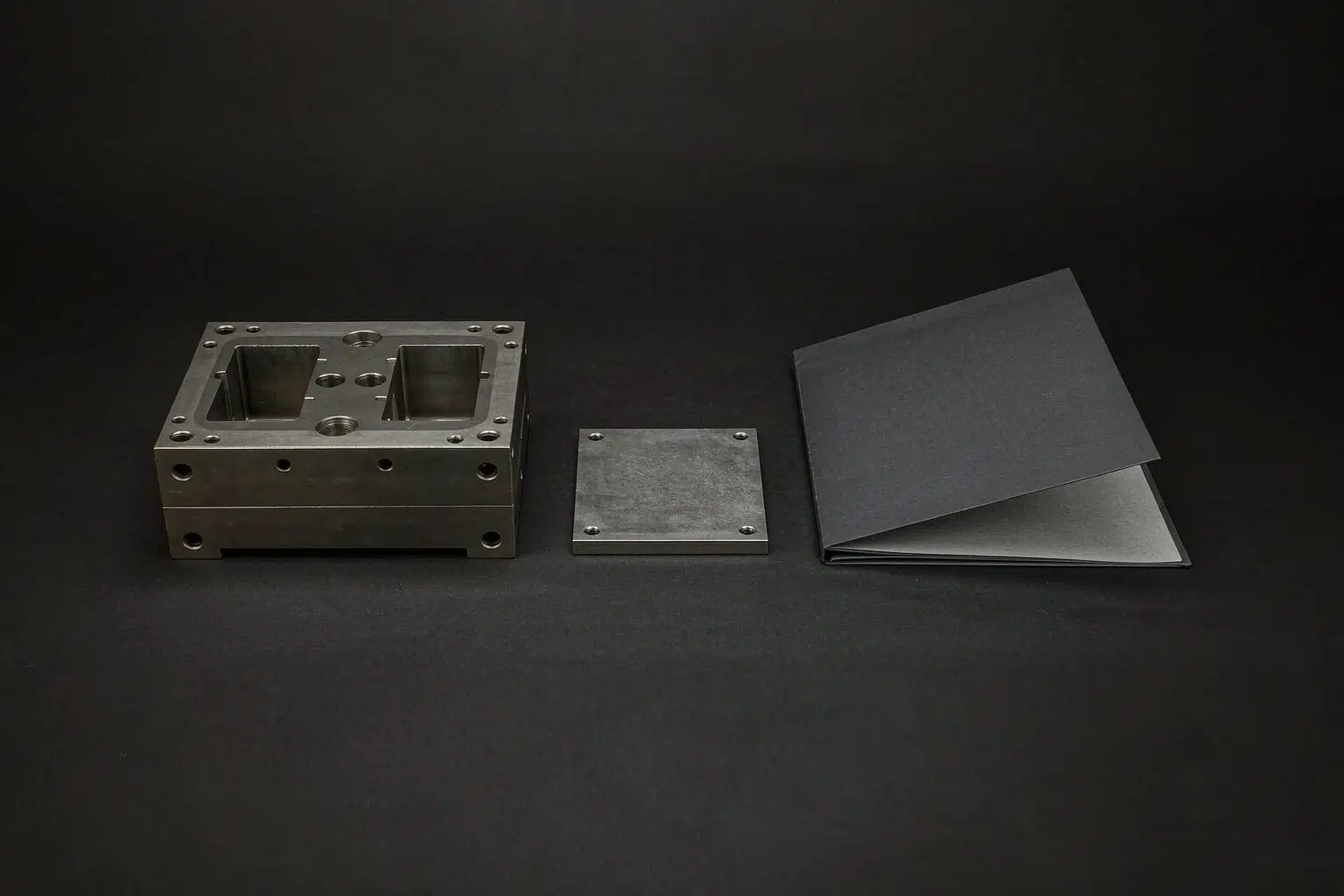
Casting tooling insurance is cheapest to specify at RFQ stage, when the supplier is still competing and the tool does not yet exist. Eight fields in the request turn the six clauses into data you can compare across bidders. Ask for them in the RFQ sheet alongside the piece price and the casting price per kg basis, so a low quote that hides an uninsured tool is visible before award.
| RFQ field | What the supplier must return | Warum das wichtig ist |
|---|---|---|
| Tool ID and location | Unique ID, plant address, building and press cell | Enables a scheduled floater and an annual physical audit |
| Agreed replacement value | Current quotation, steel grade, weight, cavity count | Sets the RC basis; avoids ACV depreciation disputes |
| Policy and loss payee | Insurer, policy number, tooling floater endorsement, buyer as loss payee | Confirms the claim actually reaches the buyer |
| Valuation basis and deductible | RC or ACV; deductible in currency and as % of agreed value | Quantifies the worst-case gap before a loss |
| Off-premises / property-of-others | Explicit sub-limit per tool ID, or a scheduled floater | Removes the most common exclusion |
| Data escrow deliverables | 2D, 3D, steel certs, heat treatment, coating, sampling sheet | Cuts rebuild time by six to eight weeks |
| Removal rights and cost cap | Notice period, removal cost ceiling, re-FAI responsibility | Protects against insolvency and disputes |
| Continuity commitment | Interim output plan, standby insert option and price | Caps the $307,100 margin exposure |
A 30-day rollout is realistic. Week one: build the tool register for the top five programs and pull the original tooling invoices. Week two: request certificates of insurance and confirm the loss payee field in writing. Week three: audit the escrowed data pack against mold and pattern design records and casting tolerance stack requirements, since a data pack missing the datum scheme will not reproduce an accepted part. Week four: insert the six clauses into the next purchase order and set an annual re-valuation date. Concentrate effort where casting part consolidation has raised tooling NRE or where a single tool carries an entire program.
Finally, keep the commercial layer connected to the shop floor. Steel casting, Aluminiumguss und other casting solutions each have different tool values and rebuild windows, so a single blanket insurance clause across all of them will be simultaneously excessive for cheap patterns and inadequate for a production die. Casting tooling insurance works when it is scheduled per tool, re-stated per year, and backed by a data pack that makes a rebuild boring.
Häufig gestellte Fragen
Does casting tooling insurance cover a production line stoppage?
Usually not in the form a buyer needs. A foundry’s business-interruption cover pays the foundry’s own lost margin, not the buyer’s downstream line stoppage. The buyer-side exposure — about $307,100 in the worked example — is addressed by removal rights, data escrow, a standby insert and an interim-output obligation in the supply agreement, not by a premium.
Who should be the loss payee on a tooling floater?
The buyer, for any tool the buyer funded. If only the foundry is named, a valid claim is still paid to the foundry and the buyer has funded the same tool twice. Ask for the buyer to be named as loss payee (and, where the insurer offers it, as an additional insured) on the specific scheduled tool IDs.
Is the residual value of a die casting mold worth negotiating?
Rarely. Net scrap value in the worked example is $251.40, or 0.34% of replacement cost. The meaningful “residual” is remaining productive capacity — $37,000 at year three — and that is the number the agreed-value schedule should reflect. Spend the negotiation on shot-count governance instead.
How often should the agreed replacement value be re-stated?
Annually, against a fresh quotation from the tool shop. Tool steel prices and machining rates move with the same indices that drive casting price adjustment clauses; a value fixed at award can be 15–25% stale by year four, which recreates the shortfall an RC clause was supposed to remove.
Does a casting tooling insurance clause replace a quality agreement?
No. The insurance clause allocates asset risk; the casting quality agreement defines acceptance criteria, inspection methods, claim windows and liability caps. They reference each other — particularly the re-FAI obligation after a rebuilt tool — but neither substitutes for the other. Treat them as one package with the RFQ, payment terms and nonconformance procedure.
*Data referenced from ASTM, NADCA, AIAG and NFPA industry publications, plus Supro MFG shop-floor tooling records. Figures are a worked example for illustration; confirm values against your own tooling quotations and insurance schedule.
 English
 Français
 Deutsch
 Italiano
 日本語
 한국어
 Polski
 Português de Angola
 Русский
 Español de Argentina