
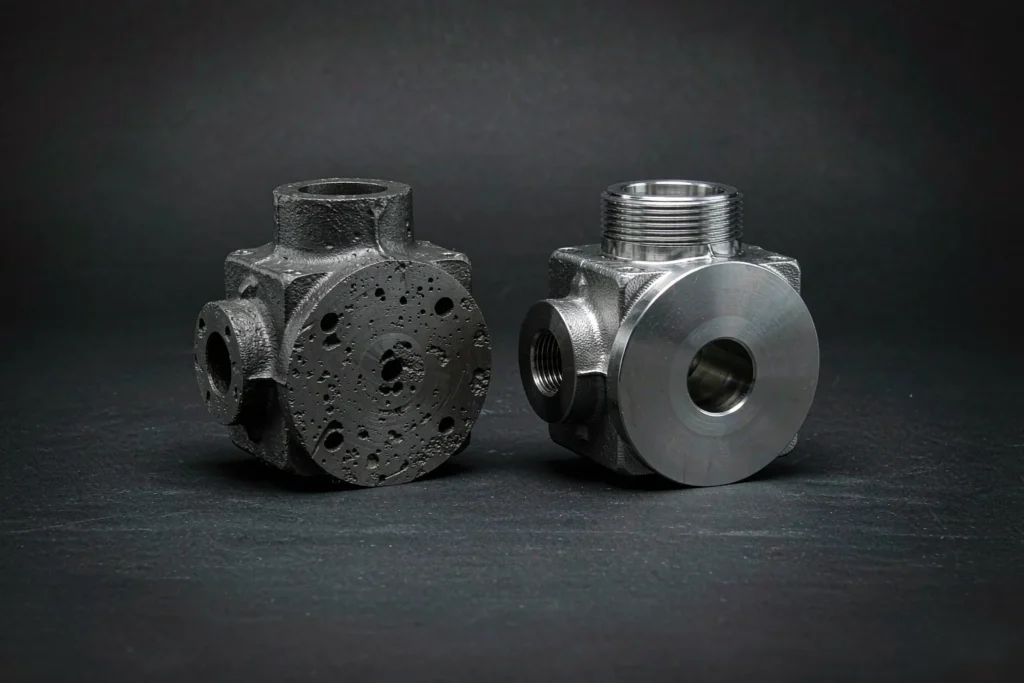
Your purchasing team negotiates a stainless valve body from $43.00 down to $41.80 and books the saving. Six weeks later the container clears customs at a landed cost of $78.76 a piece, eighty-eight percent above the FOB price that was signed off. The gap is not freight, and it is not the supplier’s margin. It is casting import duty, calculated on rules that never appear on a quotation.
This guide takes the landed cost of an imported casting apart, line by line: HS classification, the Section 232 metal layer, Section 301, anti-dumping exposure, origin rules, and the EU carbon charge arriving in 2027. The numbers come from the current US tariff schedule and from one real 2,400-piece programme. Rates move every quarter; the mechanics underneath them do not. Verify every rate against the USITC Harmonized Tariff Schedule and against CBP CROSS rulings before you release a purchase order. If you are still at the stage of choosing a process, start with our 금속 주조 가이드.
Casting Import Duty Is Decided by Classification, Not by Price
Customs does not tax castings. It taxes articles. The moment your part acquires a name under the Harmonized Tariff Schedule, the duty follows that name, not the process that produced it. This is the most expensive misunderstanding in casting import duty planning: buyers assume a casting is always a casting for tariff purposes, and suppliers rarely correct them.
One Part, Two Chapters
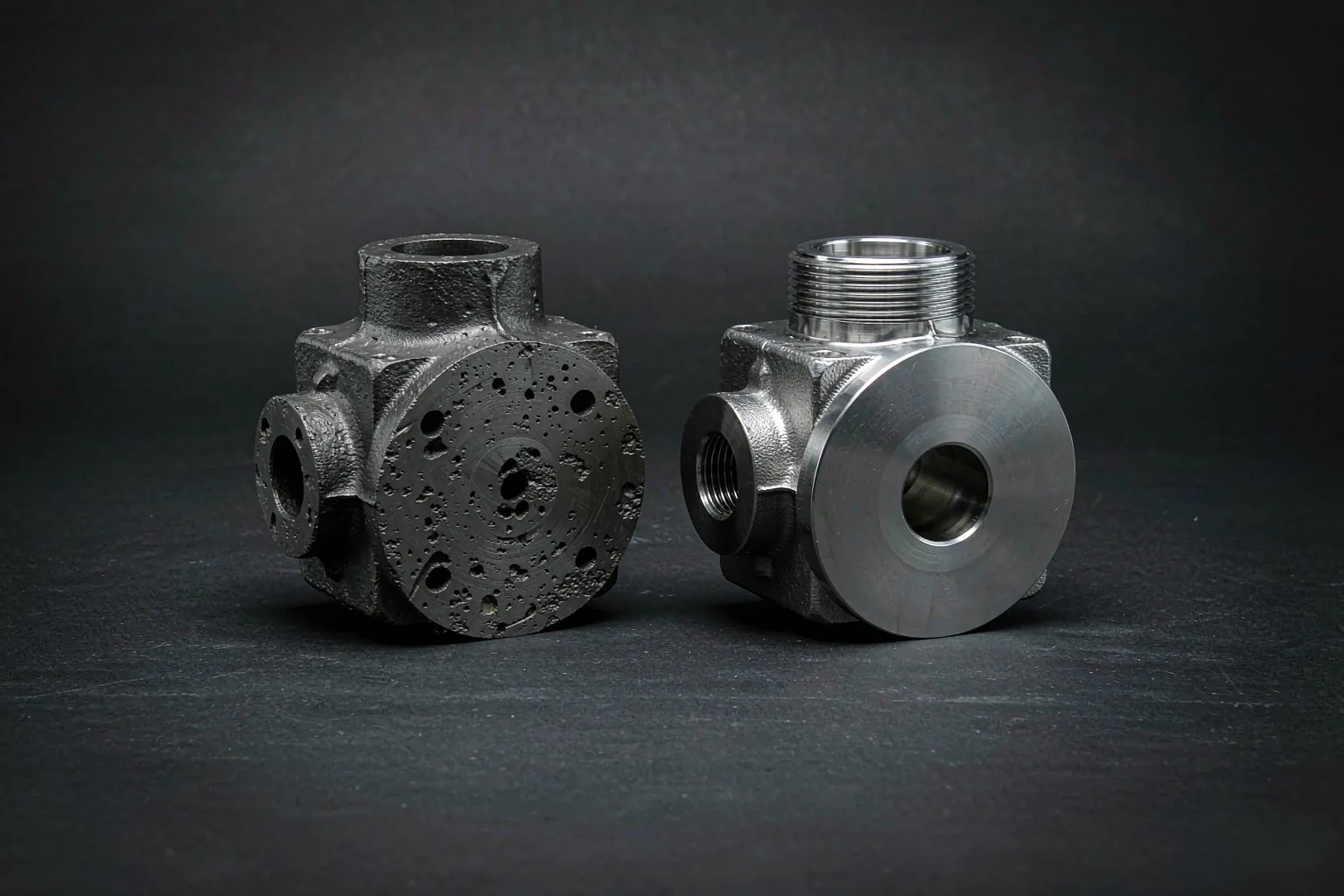
A CF8M valve body leaves the foundry as a raw casting and leaves the machine shop as a finished valve body. Those are two different articles in the tariff. Shipped as a raw casting, it falls in Chapter 73 heading 7325, other cast articles of iron or steel. Shipped machined and pressure-tested, it is a part of a valve under 8481.90.
Chapter 73 is the expensive chapter. Under the Section 232 metal regime, a derivative article classified in Chapter 73 or 76 is assessed the metal tariff on the full customs value. Reclassified outside those chapters, the same 50 percent rate applies only to the declared value of the steel or aluminium content. Moving a part from 7325 to 8481.90 does not dodge the tariff. It changes the number the tariff is multiplied against, and on a $41.80 part that difference is larger than any price concession you will win this year. Most of our 모래 주조 그리고 정밀 주조 work leaves the plant in the as-cast state, which is precisely why this fork needs to be decided at the quotation stage.
| What you actually import | Typical US HTS | Ch. | Section 232 base |
|---|---|---|---|
| Raw iron or steel casting, unmachined | 7325.99.10 / 7325.99.50 | 73 | 50% of full value |
| Machined valve body, tested | 8481.90.xx | 84 | 50% of steel content value |
| Machined pump housing | 8413.91.xx | 84 | 50% of steel content value |
| Aluminium casting, unmachined | 7616.99.xx | 76 | 50% of full value |
| Aluminium housing machined for one machine | 84xx / 85xx part | 84/85 | 50% of aluminium content value |
Where Casting HS Codes Actually Land
The base column rates inside heading 7325 are surprisingly gentle, which is exactly why the metal layer catches people out. These four subheadings cover the overwhelming majority of plain iron and steel castings arriving in the United States:
| Subheading | Covers | MFN rate |
|---|---|---|
| 7325.10.00 | Nonmalleable cast iron articles: manhole covers, grates, valve and meter boxes | Free |
| 7325.91.00 | Grinding balls and similar mill articles | 2.9% |
| 7325.99.10 | Other cast articles, of cast iron | Free |
| 7325.99.50 | Other cast articles, other (covers steel castings) | 2.9% |
A free MFN rate feels like a win. It is worth less than one percent of the landed cost when a 50 percent metal tariff is sitting on top of the same customs value. Read the MFN column last, never first.
Four Duty Layers Stack on a Single Casting
An import entry is not one rate. It is a stack, and the layers are calculated in a fixed order on bases that differ from each other. Understanding casting import duty means knowing which layer touches which base, because that is where counter-intuitive outcomes come from.
The Layers, In the Order They Are Calculated
- MFN, the column one rate. Free to 2.9 percent across Chapter 73 castings. Applied to the transaction value of the goods.
- Section 232, the metal layer. Fifty percent on steel and aluminium articles and their derivatives, from every country. Inside Chapters 73 and 76 it is charged on the full customs value; outside them, only on the metal content value.
- Section 301, the origin layer. Additional list rates on Chinese-origin goods, charged on full value. The metal content that Section 232 removes from the reciprocal tariff is not relieved from Section 301, so both can land on the same dollars.
- AD/CVD, the scope layer. Product and country specific. Several cast-product families carry orders, and the scope is defined by the order text and the ITC investigation, never by the HS code alone. A ten-digit code that looks clean can still be inside a scope definition.
Our 시전 비용 내역 covers the ex-works side of the same calculation; this article only carries the number from the factory gate to your dock.
The Charges Nobody Quotes
Two user fees ride on the entry and rarely survive into a quotation: Merchandise Processing Fee at 0.3464 percent of value with annual minimum and maximum caps, and the Harbor Maintenance Fee at 0.125 percent on ocean cargo. They are small, but they scale with value and they are frequently folded into a single “duty” line by a forwarder, which hides the structure you need to optimise. Casting import duty is not one number to accept; it is four or five numbers to negotiate, and you cannot negotiate a line you cannot see.
| Layer | Charged on | Recoverable by re-export |
|---|---|---|
| MFN | Full customs value | Yes, via drawback |
| Section 301 | Full customs value | Generally yes, via drawback |
| Section 232 | Full value (Ch. 73/76) or metal content value | No. Drawback is not available on 232 duties. |
| AD/CVD cash deposit | Entered value, at the case rate | Depends on the order |
Worked Example: 2,400 Stainless Valve Bodies
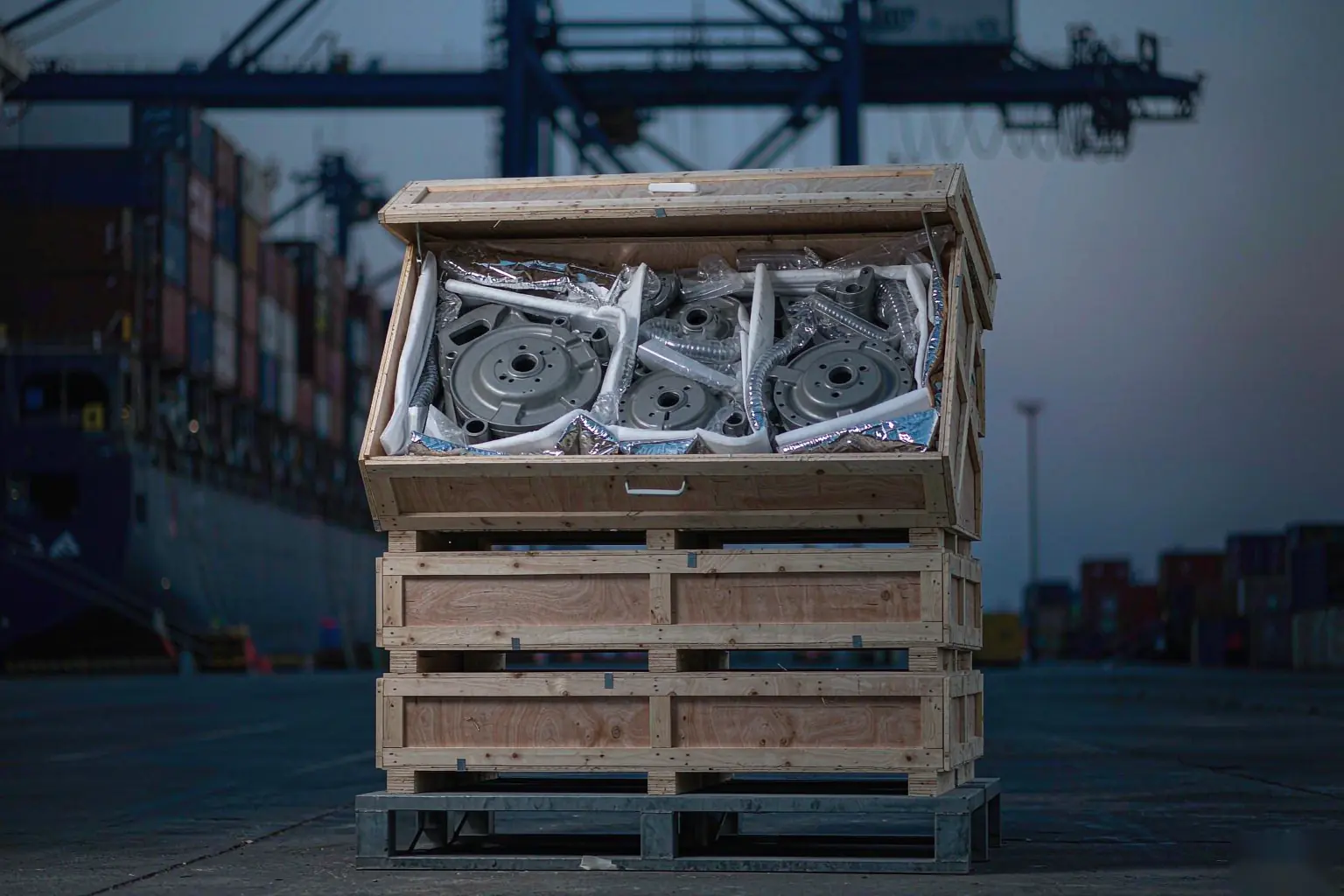
Here is what casting import duty looks like when it stops being theory. Part: CF8M valve body to ASTM A351, 8.6 kg as cast, machined and hydro-tested, 2,400 pieces a year, FOB Ningbo $41.80, Chinese origin, arriving at Los Angeles and trucked inland. Both columns use the same part at the same price, so the only variable is classification.
| Line item (per piece) | A: 7325.99.50 | B: 8481.90.xx |
|---|---|---|
| FOB Ningbo | $41.80 | $41.80 |
| Ocean freight + insurance | $3.26 | $3.26 |
| Inland delivery | $0.95 | $0.95 |
| MFN duty | $1.21 (2.9%) | $1.25 (3.0%) |
| Section 232 (metal layer) | $20.90 (50% of $41.80) | $9.80 (50% of $19.60) |
| Section 301 | $10.45 (25%) | $10.45 (25%) |
| MPF + HMF | $0.19 | $0.19 |
| Landed cost | $78.76 | $67.70 |
The gap is $11.06 per piece, $26,544 a year, from a classification decision rather than a commercial one. Set that against the negotiation that opened this article: squeezing the supplier by six percent moved $2.51 per piece, or $6,024 a year. The tariff column is worth four times the price column, and it is the one nobody puts a buyer on. This is what happens when casting import duty is modelled after the purchase order instead of before it.
One caveat, and it matters. Column B is only legitimate if the part really is a finished valve body when it crosses the border, with the machining, testing and documentation to prove it. Declaring a raw casting as a finished valve part to reach a better base is a false classification, and the penalty exposure runs to a multiple of the duty saved. Decide what you buy, then classify what you buy. Our payment terms and Incoterms guide covers the commercial side of the same shipment, and the CNC 가공 서비스 그리고 secondary operations pages show what “finished” actually has to include.
Origin Is a Manufacturing Fact, Not a Paperwork Choice
Half the sourcing strategies written since 2018 assume that changing country of origin changes the duty. For castings, that assumption is now largely wrong, and the reason is the metal layer. Origin still matters to casting import duty, but it controls fewer of the layers than it used to.
Substantial Transformation and the Tariff Shift
Origin is not where the container was loaded. It is where the last substantial transformation took place. Pouring a casting from imported pig iron or scrap normally shifts the article from Chapter 72 to Chapter 73, and CBP has long treated casting as a transformation that changes the name, character and use of the goods. That is usually enough to support a new origin.
“Usually” is doing real work in that sentence. The test is totality of the circumstances, not a tariff-shift formula, and a plant that only cleans and paints an imported casting is performing minor processing. Circumvention findings follow exactly that pattern, which is why the casting supplier audit should verify melt capacity, not just a certificate of origin. If the audit finds no furnace and no 주조용 주형 on site, the origin claim supporting your casting import duty position is being manufactured in the office.
Which Tariffs Actually Follow Origin
This is the paragraph worth forwarding to your sourcing director. Section 232 applies to steel and aluminium articles and derivatives from all origins. There is no Vietnam exemption, no India exemption and no Mexico exemption. Casting in a third country escapes Section 301, it can escape an AD/CVD order, and it may escape a reciprocal tariff. It does not escape the 50 percent metal tariff, and on a Chapter 73 classification that tariff still sits on the full value.
So a dual-source strategy built purely on geography buys you a real but partial saving, and it costs you a second qualification cycle, a second set of tooling and a longer casting lead time. Model it before you commit, and model it with the 232 line intact. A casting import duty model that assumes origin change resets every layer will overstate the saving by roughly half.
The Melt-and-Pour Declaration
Every Section 232 entry requires the importer to declare where the steel was melted and poured, or where the aluminium was smelted and cast. For a foundry melting its own heats, that is the foundry’s country, and the declaration should match the heat records. Where a plant re-melts imported pig iron, the re-melt is the melt-and-pour event, and the paperwork has to say so. Mismatches between a heat number and a declared country are the fastest route to a penalty case under any casting import duty regime, and aluminium derivatives cast in Russia carry a far higher rate than anything discussed above.
Six Levers That Actually Reduce Casting Import Duty
Ranked by what they return per hour of work, based on the example above. Together they are the difference between a casting import duty line you discover at the port and one you designed in the RFQ:
- 1. Classify what you actually import. Worth $11.06 a piece in the worked example. Requires a part drawing, a process sheet and an honest answer about whether machining happens before or after the border.
- 2. Request a binding ruling. A CBP ruling under 19 CFR Part 177 is free, takes weeks rather than hours, and converts a classification argument into a document you can hand to a broker and an auditor. Do it before the volume commitment, not after the first penalty notice.
- 3. Buy the machining offshore, up to the break-even. On these numbers a supplier can charge roughly $7.30 a piece more for a finished, tested valve body and still land cheaper than the raw-casting route, because the metal layer drops to the content value while the added labour is not metal. Above that premium, in-house machining wins again.
- 4. Split the metal content value properly. On derivatives outside Chapters 73 and 76 the 232 base is the declared metal value, which has to come from a supplier cost breakdown. A round number invented at the border is a penalty risk, not a saving. Ask for the split in the casting RFQ response, and hold it in the price adjustment clause so it stays current when alloy moves.
- 5. Fix the Incoterm and the importer of record. A DDP quote feels simple and hides the duty inside a landed price you cannot audit. DAP keeps you as importer of record, keeps the 232 line visible, and keeps the drawback conversation open on the layers where drawback still exists. Never accept DDP on a Chapter 73 casting without seeing the entry summary.
- 6. Start the CBAM file now if you sell into the EU. The EU carbon border mechanism entered its definitive phase on 1 January 2026 for iron and steel articles, which includes CN 7325. Certificates go on sale from February 2027 and the first annual declaration covering 2026 falls due on 30 September 2027, with a 50-tonne-per-year threshold per importer. The charge is driven by embedded emissions per tonne, so a cupola-based foundry and an induction-based foundry do not produce the same CBAM cost from the same drawing. Ask for a product-level carbon figure in the RFQ; you cannot reconstruct it later.
Note what is missing from that list: duty drawback. It still recovers MFN and, in most cases, Section 301 on re-exported goods, but it does not reach Section 232. Any model that assumes full recovery of the largest layer is wrong by a wide margin.
What to Ask Your Supplier Before You Accept a Landed Cost
Most casting import duty arguments are lost because the data was never requested, not because the rules were unknowable. Put these eight items on the RFQ, and a landed cost model becomes arithmetic instead of opinion.
- 배송 상태. As cast, or machined and tested? This decides the chapter, and it should match the drawing revision you are actually buying.
- Net and gross weight, plus packed volume. Freight per piece is a weight calculation, and the casting packaging decision changes it by ten percent either way.
- Metal content value split. Steel or aluminium value versus labour, tooling amortisation and finishing, expressed as a percentage of FOB.
- Melt-and-pour country, per heat. Not the country on the letterhead. The country where the furnace was.
- The HTS code used on their last US shipment, with the entry summary if they will share it, and any CBP ruling number that supports it.
- Material standard and heat treatment state. ASTM A351 CF8M is not interchangeable with a generic 316 claim, and a 밸브 주조 programme usually needs the certified chemistry to clear a pressure test.
- Embedded emissions per tonne, if you ship into the EU. Actual values beat default values, and defaults are punitive.
- Tooling ownership and amortisation basis, since casting tooling cost is often a separate invoice that never enters the declared value, and it should.
A supplier who cannot answer items three and four in writing is a supplier whose origin and metal-content declarations will be improvised at the port. That risk lands on the importer of record, which is you. For aluminium programmes the same questions apply with a different chapter, and the aluminium casting 그리고 주물 pages set out what the process route can and cannot deliver before machining.
자주 묻는 질문
Is a casting’s HS code the same as the finished part’s?
No, and this is the most consequential detail in casting import duty. A raw casting usually sits in heading 7325, while the same part machined into a valve, pump or machine assembly is classified as a part of that machine, in Chapters 84, 85 or 87. The classification follows what the article has become, not what it started as.
Do I pay Section 232 on castings from Vietnam or India?
Yes. The metal tariff applies to steel and aluminium articles and derivatives of every origin. Origin diversification removes Section 301 and possibly an AD/CVD order, but it does not remove the 50 percent metal layer, which is usually the largest single line in the casting import duty stack.
Can I recover the Section 232 portion through duty drawback?
No. Drawback is not available on Section 232 duties. MFN and, in most cases, Section 301 can still be recovered on goods that are re-exported, so a drawback model built on total casting import duty overstates the recovery substantially.
Does the weight of the casting decide whether 232 applies?
Weight only matters for goods classified outside Chapters 72, 73, 74 and 76. Those may fall outside the metal tariff if the combined steel, aluminium and copper content is under 15 percent of the article’s weight. Anything classified inside those chapters is in scope regardless of how little metal it contains, so a solid casting never qualifies for the light-weight exit.
What changes for EU imports in 2027?
The carbon border mechanism moved into its definitive phase on 1 January 2026, with certificates on sale from February 2027 and the first declaration for 2026 imports due 30 September 2027. Above 50 tonnes a year per importer, iron and steel castings under CN 7325 will carry a carbon cost based on embedded emissions, so the emissions data has to be collected at the foundry during production, not reconstructed afterwards.
*Duty rates referenced from the USITC Harmonized Tariff Schedule, CBP Cargo Systems Messaging Service guidance and the current Section 232 proclamations; MFN values verified for HTS heading 7325. Rates change by proclamation and by Federal Register notice — confirm the rate and the scope for your specific entry before quoting a landed cost. Cost figures are Supro MFG programme records for a 2,400-piece CF8M valve body programme and are used to illustrate method, not to predict your price.
 English
 Français
 Deutsch
 Italiano
 日本語
 한국어
 Polski
 Português de Angola
 Русский
 Español de Argentina