
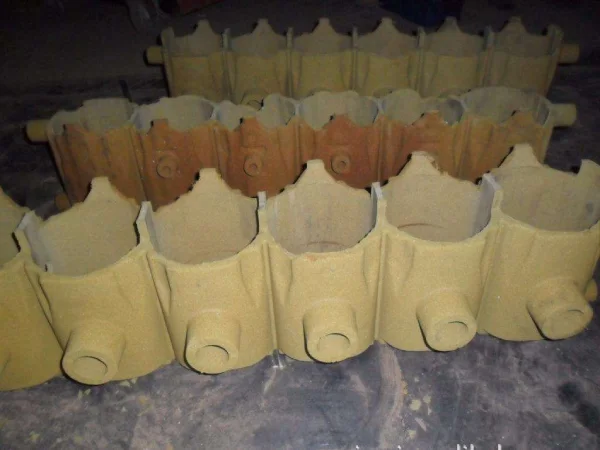
In the sand casting process, selecting the appropriate aluminum alloy for critical structural components—such as automotive chassis and powertrain parts—directly determines whether the castings can pass rigorous bench and road durability testing. From the high-cycle fatigue of suspension control arms to the thermal cycling loads on engine blocks, these applications impose diverse and sometimes conflicting requirements on the alloy’s fluidity, strength, and corrosion resistance. This article will focus on the aluminum sand casting design guide to systematically outline the selection criteria for typical grades such as A356, A357, and 319. It will analyze the mechanisms by which the cooling kinetics of resin sand casting regulate the microstructure and heat treatment response of sand castings. Combined with engineering guidelines for feed management and defect prevention, this article provides a comprehensive path—from material selection to process implementation—for producing highly reliable structural castings. The following sections will analyze, one by one, the applicable boundaries and key process adaptation points for each alloy system.
Sand Casting Metallurgy and Alloy Selection Principles for Automotive Structures
Following a sound aluminum sand casting design guide helps ensure the selection of the correct alloy composition for vehicle structural components. In the aluminum sand casting process, alloying elements directly affect the fluidity of the molten metal, susceptibility to hot cracking, and the final mechanical properties. By balancing the amounts of silicon, magnesium, and copper added, solidification characteristics can be adjusted to accommodate complex part geometries. Furthermore, understanding metallurgical behavior ensures that structural components can withstand severe dynamic fatigue, road impacts, and corrosive environments. Adhering to these core metallurgical material selection principles ensures a consistent supply of castings with high integrity that meet the stringent specifications of Tier 1 automotive suppliers.
Role of Primary Alloying Elements in Molten Aluminum Behavior
In the aluminum sand casting design guide, selecting the appropriate chemical composition determines the fluid behavior and filling capacity during the mold filling process. Adding 6% to 12% silicon significantly improves fluidity while reducing solidification shrinkage in complex cavities. Magnesium provides the necessary precipitation hardening mechanism during post-casting heat treatment, while copper enhances high-temperature mechanical strength. By carefully adjusting the proportions of these elements, fluid dynamic properties can be optimized and thermal tearing minimized. Consequently, a balanced alloy chemical composition ensures complete filling of the cavities and lays a solid foundation for structural strength.
Mechanical Property Requirements for Safety-Critical Components
Safety-critical chassis structural components manufactured using the aluminum sand casting process must strike a balance between high ultimate tensile strength and sufficient ductility. Components such as suspension control arms and steering knuckles are subjected to high dynamic loads, requiring a yield strength exceeding 220 MPa and an elongation of more than 5%. These performance metrics can be achieved by controlling grain refinement and modifying eutectic silicon prior to pouring. Regular tensile testing of specimens ensures that each batch of molten metal meets the stringent requirements of the ASTM B26 standard. As a result, structural castings maintain a high structural safety margin even under extreme road impact conditions.
Environmental Degradation and Corrosion Resistance Considerations
Strict control over alloy selection during the aluminum sand casting process ensures that products maintain long-term resistance to road de-icing salts and atmospheric corrosion. Compared to copper-rich alloys, low-copper aluminum-silicon-magnesium alloys (such as A356) offer superior resistance to intergranular corrosion. Casting engineers employ protective surface conversion coatings and shot blasting to further reduce the risk of surface damage to chassis components. Salt spray corrosion testing has confirmed that copper-free alloys maintain structural integrity throughout the vehicle’s entire service life. Therefore, selecting corrosion-resistant alloys prevents components from being compromised in harsh operating environments.
Comparative Analysis of Core Automotive Sand Casting Aluminum Alloys
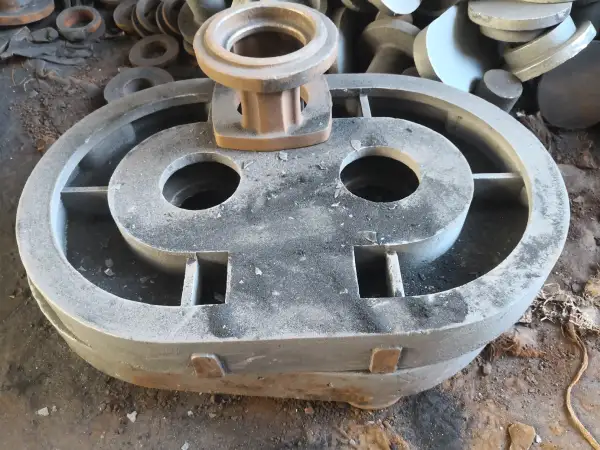
In the aluminum sand casting process, selecting the correct alloy grade determines whether automotive structural components will achieve the expected mechanical properties. Foundries evaluate the fluidity, strength, and heat resistance of various primary aluminum formulations to meet the specific requirements of vehicle applications. Structural chassis components require high ductility and impact absorption capacity, while engine components require high thermal conductivity and wear resistance. By applying a proven aluminum sand casting design guide, the optimal materials can be selected for structural brackets, housings, and engine blocks. This thorough evaluation and comparison of alloys not only prevents mechanical failures but also ensures cost-effective, high-volume production.
A356 and A357 Alloys for Structural High-Ductility Castings
Selecting A356 or A357 materials for aluminum sand casting provides exceptional ductility and impact strength for safety-critical automotive components. These Al-Si-Mg alloys respond exceptionally well to T6 heat treatment, achieving very high tensile properties. Referring to a comprehensive aluminum sand casting design guide can help engineers choose between A356 and the higher-purity A357.
Alloy Grade | Tensile Strength (UTS) | Yield Strength (YS) | Elongation (%) | Key Automotive Applications |
A356.0-T6 | 230 – 290 MPa | 165 – 220 MPa | 3.5% – 6.0% | Control arms, subframes, steering knuckles |
A357.0-T6 | 310 – 350 MPa | 240 – 280 MPa | 5.0% – 10.0% | High-stress structural nodes, crash structures |
319 Alloy for Engine Blocks and Engine Component Castings
The use of Alloy 319 in aluminum sand casting provides excellent fluidity and moderate strength for engine blocks and pump housings. Its high copper content (3.0%–4.0%) enhances machinability and high-temperature hardness, making it an ideal choice for powertrain components. Foundries strictly control iron impurity levels during the melting process to prevent the formation of coarse intermetallic precipitates that would weaken the sand casting microstructure. Consequently, castings made from Alloy 319 offer exceptional pressure sealing performance and dimensional stability under the sustained operating temperatures of internal combustion engines.
High-Zinc and High-Magnesium Specialty Alloys for Extreme Loads
The use of special aluminum-magnesium alloys, such as 535 (Almag 35), in resin sand casting eliminates the need for post-casting heat treatment while providing exceptional impact resistance. These high-magnesium alloys can age naturally at room temperature, resulting in high yield strength and excellent corrosion resistance, without the risk of thermal deformation. By precisely controlling the mold cooling rate, the precipitation of Mg₂Si at grain boundaries can be prevented, thereby avoiding damage to the sand casting microstructure. Consequently, these specialty alloys provide a reliable solution for chassis components in heavy-duty military and commercial vehicles that are subjected to extreme impact loads.
Resin Sand Casting Microstructure Control and Cooling Dynamics
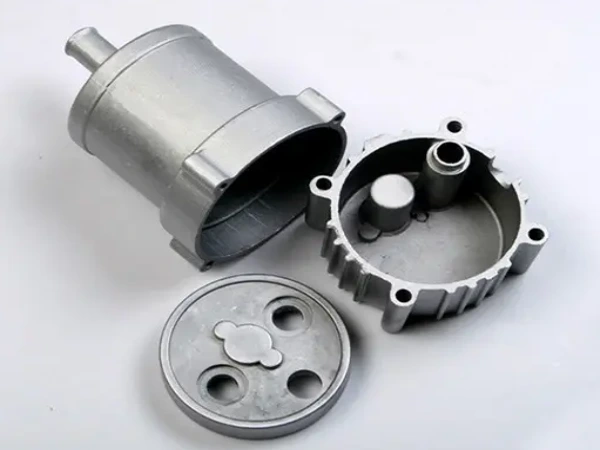
Controlling the cooling rate in resin sand casting is critical for optimizing the internal grain structure for heavy-duty automotive applications. Compared to traditional green sand molds, resin-bonded sand offers superior heat resistance and dimensional stability. By incorporating internal chill blocks and adjusting the binder ratio, it is possible to regulate local solidification rates, thereby optimizing the sand casting microstructure. Finer grain boundaries directly enhance the yield strength, ultimate tensile strength, and cyclic fatigue resistance of critical structural components. This precise control of cooling kinetics enables the production of dense, defect-free pièces moulées en aluminium that consistently meet the stringent engineering specifications of original equipment manufacturers (OEMs).
Impact of Cooling Rates on Secondary Dendrite Arm Spacing
Increasing the local solidification rate during the resin sand casting process can significantly reduce the secondary dendrite arm spacing (SDAS) in structural walls. Lower SDAS values, typically ranging from 20 to 35 micrometers, refine eutectic silicon grains and improve the mechanical ductility of the sand casting microstructure. Casting engineers strategically place copper or iron cooling cores within the mold cavity to accelerate heat removal from thick boss sections. Technicians verify the SDAS values through optical metallographic analysis to determine the optimal cooling kinetics. Consequently, a reduced dendrite arm spacing directly improves the casting’s fatigue resistance and impact strength under dynamic loads.
Thermal Stability of Resin Sand Molds during Solidification
The use of furan or phenolic binders in resin sand casting ensures that the mold walls exhibit high rigidity and thermal stability when casting thick-walled parts. A rigid mold structure can withstand wall displacement caused by the hydrostatic pressure of molten iron and the hydraulic pressure of molten aluminum, thereby maintaining strict geometric tolerances. Maintaining precise mold dimensions prevents wall deformation and avoids deterioration of the sand casting microstructure caused by localized variations in cooling rates. Additionally, embedded thermocouples are used to monitor the mold temperature distribution during solidification. Consequently, stable mold dynamic performance ensures that castings with complex geometries exhibit a uniform grain structure and consistent dimensional accuracy.
Heat Treatment Response Optimization across Microstructures
Optimizing the microstructure of the sand casting after solidification maximizes the mechanical properties during subsequent T6 solution treatment and artificial aging. During solution treatment at 535°C, fine and well-modified eutectic silicon structures dissolve more rapidly and distribute uniformly. Following established aluminum sand casting design guidelines helps engineers determine the appropriate holding time to prevent grain growth while ensuring complete precipitation of magnesium silicide. The uniformity of the microstructure can be verified by measuring the hardness and tensile strength of each heat-treated batch. Ultimately, the optimized microstructure provides maximum tensile yield strength and long-term durability.
À la recherche d'une fonderie de métaux fiable en Chine ?
- We can help you optimize product design et de réduire les coûts.
- Nous pouvons vous aider avec une haute qualité et un grand volume pièces moulées.
- Nous pouvons livrer à temps et obtenir de nouvelles opportunités de marché.
- Vous bénéficierez de Supro MFG fonderie de métaux service.
Engineering Guidelines for High-Reliability Sand Casting Design
Following a proven aluminum sand casting design guide ensures high structural reliability for automotive structural components and minimizes manufacturing defects. Design engineers must consider factors such as solidification shrinkage, gating distances, and stress concentrations early in the CAD development process. The use of resin sand casting tooling helps maintain precise dimensional control and consistent heat dissipation at complex cross-sectional transitions. Proper riser placement and thermal management measures can effectively control directional solidification and prevent the formation of porosity inside thick-walled bosses. By adopting these practical engineering guidelines, foundries can reliably produce durable, high-performance aluminum components that easily meet stringent automotive OEM standards.
Feeding Distance and Solidification Shrinkage Management
Referring to existing aluminum sand casting design guides helps process engineers calculate the distance from the riser to the casting and control solidification shrinkage. Aluminum alloys experience a volumetric shrinkage rate of approximately 3.5% to 6% during cooling; therefore, an adequate reservoir of molten metal must be provided above areas with thicker geometric cross-sections. By positioning exothermic sleeves and insulating risers near high-stress joints, directional solidification toward the sprue can be maintained. Thermal simulation software can verify whether molten metal continues to flow into the shrinkage zone until complete solidification. Consequently, precise shrinkage management eliminates spongy porosity at the internal centerline and ensures the structural cross-section maintains full volumetric integrity.
Surface Integrity and Downstream Polishing Considerations
Selecting the appropriate alloy for the aluminum sand casting process directly affects surface hardness, grain size, and the feasibility of subsequent polishing. A coarser grain structure or a softer eutectic phase may lead to an “orange peel” effect and cause uneven surface scratches during mechanical finishing. Optimizing the microstructure through rapid cooling creates a dense, hard surface layer that allows for uniform polishing prior to anodizing or painting. To ensure optimal protection and an aesthetically pleasing finish for exposed underchassis components, learn about our approach to [Sand Casting Corrosion Resistance Strategies for Automotive Underchassis Parts].
Defect Risk Reduction in High-Stress Structural Sections
Optimizing part geometry during the aluminum sand casting process can reduce stress concentration and eliminate structural hot spots. By incorporating generous internal fillets and gradual wall-thickness transitions, localized thermal tearing caused by alloy shrinkage can be prevented. The use of resin sand casting cores provides high collapsibility during pouring and allows for easy disintegration after solidification, thereby releasing internal cooling stresses. Penetrant testing along high-stress ribs confirms that the surface is free of tears or microcracks. Consequently, the robust geometric design ensures exceptional fatigue life even under severe operational loads.
Contact Supro MFG
This paper systematically analyzes the application of sand casting in automotive structural components. Focusing on the aluminum sand casting design guide, it comprehensively explains how precise metallurgical control and process design can meet the stringent standards for high-stress components—such as those in the chassis and powertrain—by addressing topics ranging from the influence of alloying elements on melt behavior, mechanical property requirements for safety-critical components, and corrosion resistance considerations, to the cooling kinetics of resin sand casting and the optimization of sand casting microstructure. The implementation of these material selection and process principles relies on foundries strictly performing spectroscopic composition analysis and tensile test specimen verification during actual production to ensure that each batch of molten metal complies with standards such as ASTM B26.
Supro MFG offers end-to-end technical support—from alloy composition screening and pouring process optimization to DFM (Design for Manufacturability) validation. Contact our metallurgy experts today to obtain customized aluminum sand casting solutions tailored to your chassis or powertrain requirements.
 English
 Français
 Deutsch
 Italiano
 日本語
日本語 한국어
한국어 Polski
 Português de Angola
 Русский
 Español de Argentina