
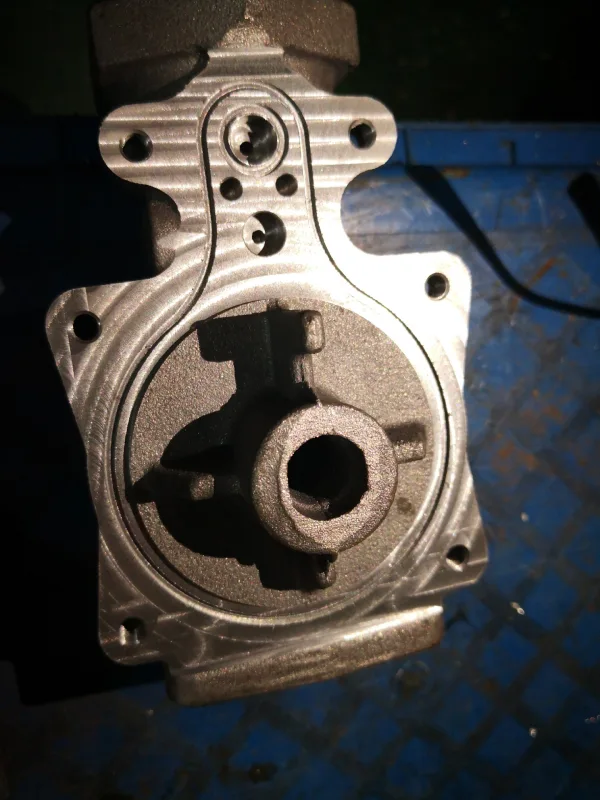
For automotive aluminum alloy structural components, the level of process control in sand casting directly determines their ultimate in-service performance. As the demands for component strength and fatigue life become increasingly stringent due to trends toward lightweighting and high-power-density engines, relying solely on adjustments to alloy composition is no longer sufficient to meet these requirements; it is essential to systematically control the entire process chain, from melting to heat treatment. This article describes how to eliminate microstructural defects during the aluminum sand casting process by controlling solidification behavior and microstructure. This includes establishing strict process windows within the foundry for various steps—from primary phase nucleation and reduction of dendrite arm spacing, to strontium modification to optimize eutectic silicon morphology, and the use of Ti-B master alloys to refine grain size. At the same time, the solution treatment and aging parameters for sand casting heat treatment, along with the control of quenching residual stresses, represent a critical leap in advancing castings from “shape” to “high strength and toughness.” The following sections will break down the core control points for each stage one by one.
Controlling grain solidification during aluminum sand casting
To achieve a precise aluminum sand casting process, strict thermal management is essential to control the transition of molten aluminum into a solid matrix. During casting, the advance rate of the solidification front directly affects the morphological characteristics of the grains throughout the entire automotive housing. By carefully regulating the temperature gradient within the silica sand mold, macroscopic segregation is suppressed and columnar grain zones are eliminated. Establishing precise directional solidification from the thin-walled extensions toward the hot sprue results in castings with structurally sound cross-sections. This fundamental thermal control ensures uniformity in the physical properties of the entire component, thereby guaranteeing that structural castings can reliably withstand the extreme cyclic loads of an engine.
Mechanisms of primary phase nucleation in aluminum alloys
Controlling heterogeneous nucleation during the sand casting process is the initial step in establishing an optimized metallurgical foundation. During sand casting, a master alloy containing titanium and boron is added to the molten metal to serve as artificial nucleation sites. These microscopic particles provide a low-energy substrate that facilitates the immediate formation of primary α-aluminum grains before thermal aggregates can grow out of control. By promoting widespread and simultaneous nucleation in the molten metal, the growth of large, brittle columnar grain regions can be effectively prevented. Ultimately, the solidified alloy exhibits a highly uniform, equiaxed grain distribution.
Impact of cooling rates on dendritic microstructures
Changing the mold cooling rate directly alters the sand casting microstructure, as it forces rapid changes in dendritic grain growth behavior. Cooling the sand mold at a faster heat dissipation rate results in a highly refined microstructure characterized by closely packed dendritic structures. Conversely, slow cooling of thick-walled sections allows alloying elements sufficient time to segregate along grain boundaries, resulting in a coarse and brittle microstructure. By monitoring local cooling curves using embedded thermocouples, it is possible to accurately predict differences in mechanical properties at various wall thicknesses of the casting. This precise thermal analysis ensures uniform grain distribution.
Secondary dendrite arm spacing reduction techniques
Optimizing the spacing between secondary dendrite arms during the aluminum sand casting process is critical for maximizing the tensile strength of safety-critical components. To effectively reduce this spacing during casting, engineers strategically embed metal cooling blocks into the sand mold to accelerate local heat dissipation. Minimizing the solidification time between the liquidus and solidus lines prevents secondary dendrites from growing into coarse, elongated shapes. Significantly reducing the spacing between secondary dendrite arms shortens the diffusion distance required during subsequent heat treatment stages. Consequently, this refinement of the microstructure significantly improves elongation and results in superior fatigue resistance under operational stresses.
Implementing chemical modification in automotive sand casting
Precise metallurgical modification during the aluminum sand casting process remains a key step in optimizing the structural properties of complex automotive alloys. By adding specific chemical modifiers to the molten metal, the brittle, coarse eutectic microstructure can be permanently transformed into a highly ductile matrix. This chemical intervention significantly improves the material’s impact toughness and fatigue life, enabling castings to withstand the high cyclic stress loads encountered in automotive applications. By combining systematic molten metal analysis with standardized melt treatment times, the aluminum moulage au sable process achieves excellent metallurgical uniformity and ensures repeatable mechanical strength across all production batches.
Refining eutectic silicon morphologies in aluminum sand casting
Optimizing the structure of eutectic silicon during the aluminum sand casting process is critical to preventing premature structural failure in thin-walled powertrain housings. In typical, unmodified aluminum sand castings, the eutectic silicon phase naturally solidifies into sharp, needle-like and plate-like crystals, which act as internal stress concentration points. By controlled addition of strontium or sodium master alloys, this growth behavior can be directly modified, transforming the brittle plate-like crystals into a fine fibrous network. This critical morphological transformation significantly improves the alloy’s tensile ductility and impact resistance, ensuring that structural components can function reliably when subjected to severe dynamic stresses.
Grain refinement using titanium boron master alloys
Implementing a precise grain refinement process during the sand casting process yields a highly uniform and isotropic metal microstructure. During the casting preparation stage, foundry technicians add a specific amount of aluminum-titanium-boron (Al-Ti-B) master alloy to the transfer ladle. These additives release thousands of microscopic nucleation sites, immediately triggering widespread grain solidification before larger dendrites can form. This fine-graining treatment successfully transforms brittle, elongated columnar regions into fine, equiaxed grains, thereby significantly improving mechanical strength and preventing hot cracking defects during cooling.
Preventing iron phase embrittlement in structural parts
Controlling the precipitation of iron-rich phases is a major quality challenge faced by any professional sand casting foundry producing safety-critical automotive components. Impurities in raw materials can lead to the formation of brittle β-iron intermetallic compounds, which severely reduce the structural ductility of the finished castings. Therefore, modifying elements such as manganese or chromium must be added with care to transform these acicular ferrite phases into the less hazardous stellite α-ferrite structure. By managing metallurgical grain boundaries, hot cracks can be prevented in areas subjected to high mechanical stress during cooling. To achieve optimal physical assembly and minimize stress concentration at mold parting lines, learn more about [Perfectionnement des lignes de joint du moulage au sable pour un aluminium automobile exceptionnel].

Optimizing sand casting heat treatment for mechanical properties
Implementing a precise sand casting heat treatment plan is a critical step in transforming raw aluminum alloy components into high-strength automotive parts. While the initial casting stage establishes the structural shape, it is the subsequent sand casting heat treatment process that fully unleashes the material’s maximum yield strength and fatigue limit. This heat treatment cycle is designed to dissolve solute clusters and systematically re-precipitate them as fine, hardening particles within the alloy matrix. By strictly controlling the temperature profile, treatment duration, and quenching rate, microstructural inconsistencies can be precisely eliminated. This rigorous heat treatment process produces stable and highly durable structural components capable of withstanding the high loads of an engine.
Solution aging mechanisms for automotive aluminum alloys
To improve the mechanical properties of aluminum sand casting alloys, it is necessary to employ precise multi-stage solution treatment and artificial aging. During the solution treatment stage, the workpiece is heated to a temperature close to 540°C to redissolve key strengthening elements, such as magnesium and silicon, back into the solid solution. After rapid quenching, the aluminum alloy enters the artificial aging stage, during which heat causes these dissolved elements to aggregate and form precipitation zones. This controlled precipitation process creates barriers to dislocation movement within the metal, thereby significantly improving the ultimate yield strength of critical automotive suspension components.
Phase precipitation control via sand casting heat treatment
Optimal phase precipitation achieved through sand casting heat treatment prevents the formation of coarse and brittle intergranular compounds. This optimized heat treatment cycle determines whether the hardening phase precipitates in the form of submicron coherent grains or as an over-aged, semi-coherent phase. Therefore, the aging hold time must be strictly controlled, as excessive aging can cause the grains to grow too large, thereby reducing the overall hardness and tensile strength of the aluminum structure. Achieving the ideal peak aging condition ensures that the internal structural regions can resist deformation under high thermal and mechanical stresses during vehicle operation.
Minimizing residual stress during rapid quenching cycles
To achieve a fine sand casting microstructure, a balance must be struck between the high-speed quenching stage and the risk of thermal deformation. To maintain a highly uniform sand casting microstructure, parts must be rapidly cooled in a water bath or polymer bath to lock in the solid solution state. However, uneven cooling rates between thin-walled and thick-walled sections can generate internal residual stresses, leading to warpage or dimensional deviations. Addressing this risk by optimizing the quenching medium temperature and agitation speed ensures that high-strength automotive housings achieve maximum structural hardness while maintaining dimensional accuracy.
Eliminating microscopic defects within the sand casting foundry
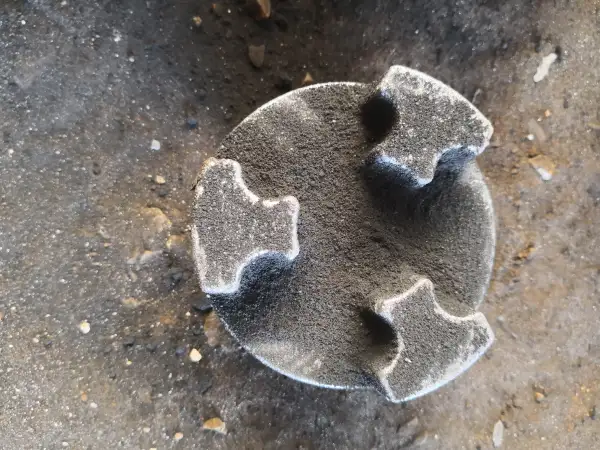
To maintain high standards in a sand casting foundry environment, strict operating procedures must be followed to identify and eliminate microscopic defects before they compromise the integrity of the components. Within the sand casting foundry, technicians work to eliminate hydrogen absorption and control the heat transfer rate at the interface between the mold and the metal. If the molten metal or mold material is not properly prepared, microscopic defects such as porosity and micro-shrinkage often form during the transition from the liquid to the solid state. By systematically monitoring melt purity and applying advanced thermodynamic tools, the formation of internal voids can be consistently prevented, thereby ensuring that the shell of every finished casting meets stringent automotive safety and pressure resistance standards.
Managing hydrogen degassing protocols before mold pouring
To obtain a pure aluminum sand casting matrix, dissolved hydrogen must be removed from the molten metal before pouring into the mold. During the preparation stage of aluminum sand castings, molten aluminum readily absorbs hydrogen from the environment, which forms microscopic spherical pores during solidification.
Foundry operators can prevent this defect by using a rotary degassing device, which injects inert argon gas into a rotating graphite rotor; the rising bubbles trap the dissolved hydrogen and carry it to the surface as slag. This purification process ensures a pore-free internal structure, thereby maximizing structural density.
Thermal management of mold media inside the sand casting foundry
In a professional sand casting foundry, controlling thermodynamic variables is critical to ensuring consistent solidification rates throughout the geometry of complex parts. At the foundry, operators monitor the moisture content of the sand, the binder ratio, and the pouring temperature to precisely control heat dissipation. If the mold sand absorbs heat too quickly or too slowly, it can disrupt the directional solidification process and cause thermal stress cracking in thin-walled sections. By properly managing mold cavity venting and sand density, uniform heat dissipation can be ensured, thereby preventing temperature imbalances that lead to deformation of critical internal passages.
Interdendritic shrinkage mitigation using advanced chilling methods
To optimize the final sand casting microstructure, it is essential to eliminate the shrinkage voids formed between dendrites at the junctions of thick-walled, slow-cooling structures. To achieve a dense microstructure in sand castings, engineers embed localized metal cooling blocks directly into the surface of the sand mold to promote rapid solidification in thicker areas. These cooling blocks accelerate the cooling rate, drawing molten metal away from adjacent risers before the dendritic network locks in and traps the voids. This targeted sand casting heat treatment technique successfully transfers shrinkage porosity from the finished component to the disposable riser system, thereby ensuring the highest material density.
À la recherche d'une fonderie de métaux fiable en Chine ?
- We can help you optimize product design et de réduire les coûts.
- Nous pouvons vous aider avec une haute qualité et un grand volume pièces moulées.
- Nous pouvons livrer à temps et obtenir de nouvelles opportunités de marché.
- Vous bénéficierez de Supro MFG fonderie de métaux service.
Contact Supro MFG
This paper systematically analyzes the key strategies for enhancing the performance of automotive components through precise control of solidification behavior and microstructure during the aluminum sand casting process. The study indicates that sand casting foundries must closely integrate the three key processes—grain refinement, chemical modification, and heat treatment—to produce dense castings that combine high strength with fatigue life. This precise control over solidification curves and precipitation kinetics is elevating the quality of thin-walled, complex aluminum alloy parts to new heights.
Therefore, whether by optimizing the sand casting microstructure through metal chill blocks to eliminate inter-dendritic shrinkage or by strictly adhering to heat treatment cycles to achieve peak aging conditions, Supro MFG technical team is committed to minimizing microscopic defects in every casting. At the same time, our IATF 16949-certified quality system ensures that every batch of structural components meets stringent automotive safety standards. Contact Supro MFG today to transform your engineering specifications into high-strength, pore-free aluminum alloy castings.
 English
 Čeština
 Français
 Deutsch
 Italiano
 日本語
日本語 한국어
한국어 فارسی
فارسی Polski
 Português de Angola
 Русский
 Slovenčina
 Español de Argentina
 Українська