
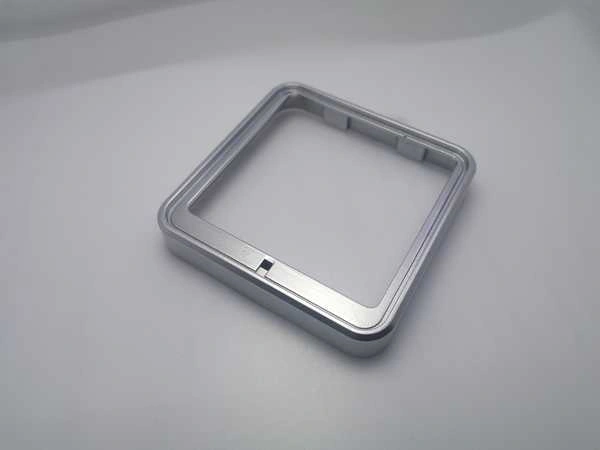
در تولید صنعتی با حجم بالا، قطعات ریختهگری تحت فشار روی، بهطور مداوم در معرض فشارهای سخت تولیدی قرار دارند. حتی یک نقص منفذ ریز میکروسکوپی در یک قطعه ریختهگریشده برای بر هم زدن آرامش کل فرآیند تولید کافی است. برای خریداران، مشکلات پُروزیت (تخلخل) در قطعات ریختهگری روی، یک سری واکنشهای زنجیرهای را به راه میاندازد: افزایش چشمگیر ضایعات تولید، نقصهایی مانند پوسته پوسته شدن لایه آبکاری، و تأخیرهای مداوم در تحویل سفارش.
“ثبات برابر با سود است”، این را یک مهندس فرآیند در سوپرو امافجی (Supro MFG) میگوید، دیدگاهی که توسط... ریختهگری فلزات دادهها—که نشان میدهد کاهش نرخ معیوب بودن بهطور مستقیم حاشیههای سود را افزایش میدهد. بنابراین، کلید کنترل تخلخل در روی ریختهگری تحت فشار در مدیریت ذوب و مهار گازها نهفته است؛ هنگامی که این موارد کنترل شوند، آشفتگی فروکش میکند.
این مقاله علل ریشهای ایجاد حفره در روی را تحلیل میکند. ریختهگری تحت فشار, ، که شامل عوامل کلیدی مانند ترکیب آلیاژ، دمای ذوب و فرآیندهای خنکسازی میشود، و روشهای تست غیرمخرب چندلایه را معرفی میکند. با بهینهسازی قالب فرایند ریختهگری, اجرای کنترل SPC و استفاده از پوششهای مناسب برای قالب، نرخهای تخلخل را میتوان بهطور قابلتوجهی کاهش داد. با سیستم تولید دایکست روی حرفهای خود،, سوپرو امافجی به طور مؤثری چگالی و یکنواختی بچ قطعات دایکست را بهبود میبخشد و خواستههای تولید دقیق با حجم بالا را برآورده میکند.
چرا متخلخل بودن مایه دردسر قطعات دایکست روی است
منافذ ریز پنهان در ساختار متراکم قطعات دایکست روی، نه تنها استحکام را به خطر میاندازند، بلکه بر کیفیت سطح نیز تأثیر میگذارند. از تنظیم ترکیب آلیاژ گرفته تا کنترل فرآیند سرد شدن، هر مرحله بر کیفیت نهایی محصول تأثیر دارد. کنترل دقیق ترکیب آلیاژ برای از بین بردن خطر منافذ ریز ناشی از ناخالصیها، به همراه تنظیم دقیق در طول کل فرآیند، برای اطمینان از اینکه قطعات دایکست روی با حجم بالا، کیفیت و قابلیت اطمینان ثابتی را ارائه دهند، ضروری است.
چگونگی تأثیر ترکیب آلیاژ بر تشکیل منافذ
مشکلات متخلخل بودن روی (یا مشکلات حفرهزایی در روی) ریختهگری تحت فشار اغلب ناشی از ترکیب شیمیایی است. تعادل شیمیایی در آلیاژ روی بهطور مستقیم رفتار گازها و ویژگیهای جمعشدگی فلز را تعیین میکند. در عین حال، ناخالصیهای کنترلنشده و عناصر ردیفی میتوانند بهطور قابلتوجهی محلولپذیری گازها در فلز مذاب را افزایش داده و طولافزایی روی را کاهش دهند. محصولات ریختهگری تحت فشار. اگر مذاب تمیز نباشد، ممکن است گازها در طول تزریق به دام بیافتند و عیوب حفرهزایی را تشدید کنند.
هرچه ناحیه انجماد باریکتر باشد، انقباض فلز هموارتر است. اگر این محدوده خیلی وسیع باشد، مناطق مایع مجزا به آسانی تشکیل میشوند که مستقیماً منجر به مکانیزم انقباضی. به عنوان یک فرد حرفهای سازنده دایکست سوپرو امافجی (Supro MFG) با ۲۵ سال سابقه و دارای گواهینامههای دوگانه ISO 9001 و IATF 16949، اعتبارسنجی دقیق آلیاژ و کنترل ترکیب را برای تضمین کیفیت قطعات دایکست روی از منبع و حذف خطر حفرههای ناشی از تولید صرفاً مبتنی بر تجربه، اجرا میکند.
عناصر کلیدی در دایکست آلیاژ روی برای بهبود عملکرد خدمت میکنند، اما عدم تعادل در نسبت آنها میتواند خطرات کیفی را نیز به همراه داشته باشد، همانطور که در ادامه به تفصیل آمده است:
عنصر / پارامتر مشخص | اثیرات مثبت بر روی قطعات ریختهگری دایکست روی | عیوب حفرهای و خطرات کیفی ناشی از مقادیر بیش از حد یا کنترل نامناسب |
آلومینیوم | مقادیر بیش از حد، دامنه انجماد را وسیعتر کرده and خطر انجماد انقباضی را افزایش میدهد. | |
منیزیم | مقاومت در برابر خوردگی را بهبود میبخشد | سطوح بیش از حد اکسیداسیون را تسریع کرده و منجر به ایجاد حفره میشوند |
مس (مس) | سختی را افزایش میدهد قطعات ریختهگری روی | سطوح بیش از حد، دامنه انجماد را محدود می کند اما ممکن است تنش های داخلی را تشدید کند |
نقش دمای مذاب و نرخ سردایش
در تولید انبوهِ قطعات دایکست زاماک, دمای ذوب و نرخ سرد شدن پارامترهای کلیدی فرآیند هستند که چگالی داخلی قطعات ریختهگریشده را تعیین میکنند و از بروز نقصهای حفرهای در منشاء جلوگیری میکنند؛ دقت در کنترل این پارامترها به طور مستقیم بر کیفیت قطعات ریختهگری آلیاژ روی تولید انبوه تأثیر میگذارد.
کنترل دقیق دمای مذاب جنبه مهمی از فرایند دایکاست. اگر دمای ذوب از محدوده استاندارد بیشتر شود، ظرفیت جذب گاز روی مذاب به طور قابل توجهی افزایش مییابد و باعث میشود مقدار زیادی گاز در فلز مذاب به دام بیفتد و در نهایت منجر به افزایش شدید میزان تخلخل در دایکت زاماک ریختهگریها؛ برعکس، حفظ دما در محدوده بهینهی فرآیند، جریان روان روی مذاب روی و پر شدن یکنواخت حفرهی قالب را تضمین میکند و در نتیجه نقصهایی مانند حفرات گازی و سردجوشی را از منشاء کاهش میدهد.
نرخ سرمایش و یکنواختی دمای قالب عوامل به همان اندازه حیاتی هستند. نرخ سرمایش بیش از حد کند، چرخه انجماد فلز را به طور قابل توجهی طولانی می کند و تشکیل مک های انقباضی را تشدید می کند. این نه تنها حجم حفرات را افزایش می دهد، بلکه باعث به هم پیوستن آن ها می شود که به شدت باعث به خطر افتادن استحکام ساختاری قطعات ریختهگری دایکست روی. An uneven distribution of mold temperature, on the other hand, can lead to abnormal grain size and a loose, brittle microstructure, further increasing the risk of porosity defects. Conversely, rapid and uniform cooling can effectively refine the grain structure of zinc alloys, significantly improve the density of die اجزای گچگرفتگی, and block the formation pathways of shrinkage porosity.
In the actual production and quality control of zinc die cast products, it is necessary to maintain the melt temperature within a precise process range, ensure uniform temperature throughout the die using a temperature control system, optimize the layout of the die’s cooling channels to reduce solidification time, and continuously monitor the consistency of production cycles across batches.
As a professional zinc die casting manufacturer, Supro MFG relies on a standardized process control system to conduct real-time, end-to-end monitoring of melt temperature and cooling rates. This ensures that high-volume zinc die castings exhibit high density and dimensional accuracy, minimizes hidden porosity defects, and meets the stringent requirements of high-end manufacturing applications.
Inspection methods for detecting internal voids
Even with precise control throughout the zinc die فرایند ریختهگری, hidden internal porosity may still occur. X-ray radiography can clearly capture shrinkage voids and gas pores inside die اجزای گچگرفتگی, and is typically the primary method used for batch sampling and production inspection of large-volume zinc die castings. CT scanning provides three-dimensional imaging of the internal cavities of castings, precisely locating microscopic porosity in complex structures and areas of thickness transition, thereby offering comprehensive defect detection for precision zinc die castings; ultrasonic testing, on the other hand, focuses on critical load-bearing structural areas, efficiently identifying internal discontinuities and ensuring the structural integrity of the castings.
Surface and microstructural analysis are equally indispensable. Penetrant testing can quickly detect voids in zinc die castings that are connected to the surface, thereby preventing quality issues during subsequent electroplating and assembly processes; Metallographic analysis, through cross-sectional examination, precisely analyzes microstructure and pore morphology, providing technical evidence for tracing the root causes of defects. Density measurement of zinc die cast products quantifies casting density by comparing theoretical mass with actual formed mass. All inspection procedures must adhere to standardized non-destructive testing protocols to issue professional certification.
As a professional zinc die casting manufacturer, Supro MFG has established a multi-tiered inspection system that integrates non-destructive testing, microscopic analysis, and density verification to ensure that every batch of zinc die castings meets the required mechanical properties and dimensional accuracy. Comprehensive inspection data and a traceability system significantly reduce assembly risks, resulting in more stable and reliable quality for high-volume zinc die castings.
به دنبال یک ریختهگری فلز قابل اعتماد در چین هستید؟
- ما میتوانیم به شما در بهینهسازی طراحی محصول و کاهش هزینهها کمک کنیم.
- ما میتوانیم با کیفیت بالا و حجم زیاد به شما کمک کنیم اجزای گچگرفتگی.
- ما میتوانیم به موقع تحویل دهیم و فرصتهای بازار فروش بیشتری به دست آوریم.
- You will benefit from Supro MFG metal casting service.
3 Steps to Control Porosity Defects in Zinc Die Castings
Pores can rapidly compromise the surface quality and strength of die castings. If air infiltrates the molten zinc, the resulting zinc die casting products will be compromised. Optimizing melt temperature and filling time, fine-tuning injection pressure and venting, and implementing SPC-based cavity filling are essential for ensuring that castings are dense, clean, and meet production requirements.
Step 1: Optimize melt temperature and filling time
In the mass production of zinc die castings, controlling melt temperature and filling time is essential for producing consistent castings. When controlling the temperature of zinc alloys, the melt temperature should be maintained within a narrow range. Excessively high temperatures significantly increase gas solubility, exacerbating oxidation and gas entrapment issues; conversely, excessively low temperatures can lead to defects such as insufficient filling and poor bonding in thin-walled parts. Maintaining a stable furnace temperature setting is key to ensuring consistency in the production cycle of zinc die cast products.
Properly controlling the filling time of zinc die castings can effectively reduce air entrapment. Matching gate dimensions to cavity ضخامت دیوار and optimizing runner layout allows molten metal to fill the cavity smoothly, minimizing turbulence and bubble formation. As a professional zinc die casting manufacturer with 25 years of experience and dual certifications, Supro MFG engineers simultaneously fine-tune temperature profiles and gate designs to ensure more uniform filling and fewer defects, laying the foundation for stable high-volume production.
Step 2: Fine-tune injection pressure and venting
Stable injection pressure and intelligent venting design are key to improving the density of دایکت زاماک castings. The low-pressure phase allows the molten metal to advance smoothly, reducing entrapped air; the high-pressure phase fully fills the mold cavity, enhancing the density of thick-walled die castings. By incorporating micro-vent holes at the end of the filling process, designing overflow channels for complex molds, and coordinating with the ejection timing, air is efficiently expelled from the mold cavity.
If there is no escape route for the air, air pockets will appear on zinc die cast products in the form of bubbles or pits. Proper venting and intelligent venting help keep the mold cavity clean. Supro MFG matches pressure control curves with custom mold designs to help customers upgrade standard دایکت زاماک castings into high-reliability products suitable for the electronics and hardware industries.
Step 3: Implement SPC for consistent cavity filling
When SPC is combined with real-time process control, the porosity of zinc die castings decreases rapidly. Key die casting parameters to monitor include injection pressure, mold temperature, filling time, and metal weight per shot. These signals are fed into statistical process control charts, allowing for the early detection of even minor deviations in cavity filling behavior. This is the solution for achieving long-term consistency in the mass production of دایکت زاماک castings.
In 2025, the North American Die Casting Association noted that process monitoring and data-driven control are among the top drivers reducing scrap rates in zinc die casting operations, especially for high-volume precision components.This observation aligns with the actual conditions on the shop floor. Rigorous SPC not only reduces the defect classification rate but also ensures dimensional accuracy, guaranteeing that every batch of zinc castings meets specification requirements.

Optimizing the injection process to reduce porosity in zinc die castings by 30%
In high-volume zinc alloy die casting production, even minor optimizations to injection parameters can yield significant results. When the molten zinc, die, and die casting process are properly coordinated, porosity rates drop rapidly. For manufacturers seeking to produce zinc die castings of higher quality, the data clearly shows that controlling the process leads to improved quality.
Statistical process control of injection parameters
The key to ensuring process stability in professional zinc die casting services lies in implementing standardized statistical process control over critical injection parameters. The monitoring system includes:
Process monitoring, such as tracking melt temperature and ensuring injection speed consistency;
Plotting cavity pressure X-bar control charts and cooling fluctuation R control charts;
Identifying abnormal process fluctuations, conducting root-cause data analysis, and implementing parameter optimization.
Through this refined process control solution, zinc die castings have achieved a tangible improvement in quality. It effectively reduces gas entrapment during melt flow and significantly enhances casting density, resulting in a marked improvement in both the structural strength and batch consistency of the finished products. As a seasoned zinc die casting manufacturer, Supro MFG relies on rigorous SPC (Statistical Process Control) throughout the entire production process, moving away from traditional, experience-based production methods to achieve precise and controllable quality in zinc alloy die cast قطعات.
Correlating fill time reductions with fewer voids
Shorter filling times can directly reduce the porosity of zinc die castings. By controlling the gate velocity to suppress turbulence, optimizing metal flow through uniform wall thickness, and stabilizing cavity pressure, the formation of porosity is minimized at the source of filling.
Engineers at Supro MFG have confirmed through porosity analysis that faster, smoother filling reduces die عیوب ریختهگری. The key lies in the coordinated adjustment of process parameters—adjusting the injection speed while preventing spatter and entrapped air. When zinc alloy die cast parts fill smoothly, their internal structure becomes denser, resulting in superior machinability.
Verifying improvement via non-destructive testing
Drawing on extensive practical experience and validated through standardized non-destructive testing and a traceable quality assurance system, Supro MFG has reduced the porosity of its zinc die castings by 30%. Testing methods include X-ray inspection to detect internal shrinkage and porosity, as well as ultrasonic testing to assess density variations and bond integrity. Subsequently, defect detection data is recorded, baseline data is compared with optimized batches, and improvements in porosity metrics are verified. Ongoing validation demonstrates that the quality of zinc alloy die cast parts improves with each batch, translating data into tangible production benefits.
Can mold coatings reduce porosity in zinc die castings?
Air pockets can insidiously compromise the strength and surface quality of zinc die castings. Even when the die casting process is well-established, the presence of gas entrapment or shrinkage defects can still disrupt production. An appropriate mold coating can help regulate temperature and improve release properties, thereby ensuring consistent quality in zinc die casting without complicating the production process.
Selecting Coating Thickness for Optimal Release
The selection of coating thickness directly determines the demolding performance and quality consistency of دایکت زاماک castings. A thin coating effectively improves lubricity, ensuring smooth demolding of castings; conversely, an excessively thick coating reduces heat transfer efficiency and can easily lead to dimensional deviations. Balanced heat transfer is key to maintaining consistent casting quality. Prior to mass production, spray patterns must be thoroughly tested, and coating parameters finely optimized to ensure smooth demolding of die castings without surface scratches, thereby comprehensively improving production yield and product consistency.
Textural Requirements and Die Life Expectancy
Appropriate mold surface textures are not only a matter of appearance but also significantly influence heat transfer and metal filling efficiency, making them a critical factor in ensuring consistent surface quality in zinc die castings. Fine textures help improve paint adhesion, while polished cavities allow for stricter control over surface quality. Excessively rough textures accelerate mold wear, whereas overly smooth surfaces increase the risk of part sticking. Scientific die casting mold maintenance and cavity design not only ensure the integrity of the castings but also extend the service life of the mold.
Maintenance schedule to prevent coating breakdown
Ensuring the long-term effectiveness of coatings depends on a standardized maintenance plan for zinc alloy die تولید ریختهگری.
During routine operations, inspect coating integrity according to established production cycles and monitor the condition of hot spots on the molds. At the same time, use appropriate mold cleaning methods to prevent abrasion damage. Strict standards for recoating frequency must be established for the lifecycle of دایکت زاماک casting products, and the impact of coatings on production efficiency and mold life must be monitored.
Supro MFG provides preventive maintenance solutions for the production of high-quality دایکت زاماک castings, ensuring the stable operation of zinc alloy die casting production lines and proactively mitigating the risk of porosity expansion.
Contact Supro-Mfg
In summary, porosity defects in zinc die castings are caused by multiple factors, including alloy composition, melt temperature, and cooling processes. By optimizing temperature and filling time, adjusting injection pressure and the venting system, and combining these measures with SPC-based data management, along with multi-layer non-destructive testing and scientific mold coating maintenance, porosity rates can be effectively reduced.
As a professional zinc die casting manufacturer in China, Supro MFG leverages its dual-certification system and proven processes to significantly enhance the density and stability of die اجزای گچگرفتگی, meeting the stringent requirements of high-volume precision manufacturing.
 English
 Čeština
 Français
 Deutsch
 Italiano
 日本語
日本語 한국어
한국어 فارسی
فارسی Polski
 Português de Angola
 Русский
 Slovenčina
 Español de Argentina
 Українська