

In automotive powertrain R&D, sand casting is emerging as a core method for prototype validation due to its ability to rapidly produce complex internal cavities. Compared to permanent molds, aluminum sand casting can accommodate frequent design changes at a lower cost, making it particularly suitable for early iterations of thin-walled shells such as A356. This article systematically covers topics ranging from melt purification and metallurgical control in prototype castings, to the acceleration of mold fabrication through CNC machining and 3D printing, to the coordinated matching of sand casting tolerances and CNC finishing allowances, as well as X-ray and penetrant inspection processes for high-stress components. These practices can help engineering teams obtain qualified castings ready for on-vehicle testing within weeks, thereby avoiding mold rework in later stages. The following sections will break down key parameters and common pitfalls step by step, providing immediately applicable engineering guidance.
Introduction to sand casting for rapid automotive prototyping
Using sand tecnología de fundición, automotive engineers can rapidly transform highly complex CAD models of engines, intake manifolds, and transmissions into fully functional physical prototypes. In the early stages of powertrain development, physical testing under extreme thermal and mechanical loads is critical for validating internal fluid dynamics and structural fatigue performance. By opting for a high-quality castings process rather than permanent molds, automakers can not only significantly shorten development cycles but also ensure that the mechanical properties of the test castings are fully consistent with those of the final production parts.
Role of sand casting in engine prototype validation
The success of engine validation depends largely on prototype aluminum sand casting, which are used to evaluate the engine’s structural integrity under extreme thermal and mechanical stresses. Engineers mount these physical prototypes on dynamometers to monitor coolant flow, combustion pressure, and vibration curves under peak loads. A specialized binder system used in the castings process ensures that complex internal oil passages and cooling jackets are formed with precision and without porosity. Ultimately, these rigorous tests validate the materials’ fatigue life and the design’s feasibility before moving to costly production lines.
Why aluminum sand casting rules powertrain R&D
Hyundai Motor’s powertrain R&D relies heavily on aluminum sand casting to meet the stringent weight-reduction targets required by international emissions standards. Aluminum alloys such as A356 offer an excellent strength-to-weight ratio, but their rapid heat dissipation characteristics require advanced thermal management techniques during the solidification process. The castings process allows for easy adjustment of pouring temperature and gating design to accommodate these complex, thin-walled geometries. As a result, developers are able to produce optimally designed, high-strength powertrain housings, thereby successfully reducing vehicle weight and improving fuel efficiency.
Accelerating powertrain engineering through rapid metal casting
To accelerate development, rapid sand casting pattern making technology must be directly integrated into the “CAD-to-metal” engineering workflow. Traditional mold manufacturing can take up to six weeks, which severely hinders the iterative process for complex transmissions and cylinder heads. By using CNC-machined polyurethane patterns or 3D-printed sand molds, the aluminum sand casting process completely bypasses these structural bottlenecks. As a result, physical test parts can be delivered to the power test bench within days, enabling engineering teams to rapidly implement and validate iterative design improvements.
How sand casting pattern making accelerates prototype delivery
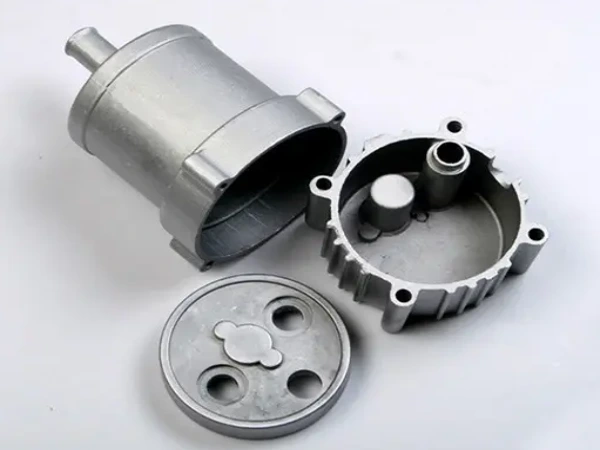
Efficient sand casting pattern making is a critical step in transforming virtual 3D CAD models into physical automotive components. When developing complex powertrain housings, selecting the correct pattern-making method directly determines the overall delivery schedule and the dimensional accuracy of the first pour. By combining traditional casting principles with advanced manufacturing technologies, pattern production can be optimized to meet tight R&D schedules. This strategic approach to pattern making ensures that the final proceso de fundición produces defect-free, near-net-shape components that are immediately ready for engineering evaluation.
Digital sand casting pattern making for rapid tooling
Advanced pattern making processes now utilize CAD-based CNC machining and 3D printing technologies, thereby eliminating the manual drafting stage involved in traditional pattern making. By carving high-density polyurethane boards or directly printing sand patterns using binder jetting technology, the time-consuming manual carving stage can be completely bypassed. This digital transformation enables the sand casting process to begin within 48 hours of the design being finalized. As a result, high-precision molds can be produced rapidly, and if initial physical testing requires design modifications, adjustments can be made quickly.
Comparing pattern materials for high-precision sand casting
When selecting pattern materials for castings, it is necessary to strike a balance between dimensional stability and total prototype yield. For simple, single-use shapes, temporary wooden patterns remain cost-effective; however, to maintain strict geometric dimensions across multiple prototype runs, high-density plastic or aluminum patterns must be used. Using stable materials in sand casting pattern making prevents deformation caused by moisture absorption and warping during the sand compaction process. Ultimately, the consistency of these materials ensures that each mold cavity remains perfectly uniform, resulting in highly reliable metal parts.
Streamlining sand casting pattern design-to-pour workflows
To optimize the workflow from initial design to final pouring, the key lies in directly integrating simulation software into the sand casting pattern making stage. Before encasing the physical model in sand, virtual solidification tests must be conducted to position the gates and runners in locations that prevent shrinkage. These digital checks ensure that aluminum sand castings are completely free of hidden porosity during machining. Consequently, this predictive planning not only reduces scrap rates but also avoids costly mold rework.
Meeting critical sand casting tolerances for automotive engineering
When manufacturing complex powertrain components that must align perfectly with existing engine blocks and transmission housings, achieving strict fundición en arena tolerances is critical. Without rigorous dimensional control, thermal displacement and mechanical stress during operation could lead to severe fluid leaks or structural misalignment. By implementing rigorous quality inspections and optimizing the solidification process, foundries can meet international casting standards—such as ISO 8062—even when dealing with complex geometries. Striking a balance between tight tolerances and the natural shrinkage of aluminum piezas fundidas en arena ensures that finished products meet the stringent requirements of the automotive industry before entering the final machining line.
Standard dimensional sand casting tolerances for powertrain blocks
For complex powertrain cylinder blocks that require precise wall thicknesses for cylinder bores and cooling sleeves, maintaining accurate sand casting tolerances is critical. Standard industrial specifications (such as ISO 8062 DCTG9) define the permissible dimensional tolerance ranges for cast blanks. To control these tolerance ranges, mold deformation and mold assembly deviations must be taken into account during the initial design phase. By consistently and strictly controlling these tight dimensional tolerances throughout the castings process, high-stress engine components can be ensured to have the uniform wall thickness required to withstand extreme combustion pressures.
Mitigating thermal contraction to achieve tight casting tolerances
Controlling thermal shrinkage during the aluminum sand casting process is critical to preventing dimensional distortion as the molten metal cools and solidifies. Because aluminum alloys have a high shrinkage rate, adjusting the sand mold layout by placing cooling blocks within the mold can promote uniform, directed cooling. This controlled thermal management approach keeps critical dimensional tolerances within specified limits and minimizes internal stresses that cause warpage. To prevent dimensional warping and ensure structural integrity during solidification, learn more about our approach to [Eliminación de la porosidad en la fundición de arena de aluminio para aplicaciones automotrices críticas para la seguridad].
Aligning sand casting tolerances with precision CNC machining
Matching the dimensions of aluminum sand casting rough castings with the machining allowances for precision CNC machining is critical to preventing defects beneath the surface from being exposed during the final machining process. Engineers specify optimal reference points on the cast blanks and then guide operators through the clamping process. Providing a uniform machining allowance of 2 to 3 millimeters ensures that over-machining into porous areas is avoided during the cleaning process. This careful coordination of sand casting tolerances with the finishing steps guarantees that critical mating surfaces achieve sub-millimeter flatness, thereby meeting the requirements for reliable automotive gaskets and seals.
Engineering quality in prototype aluminum sand casting projects
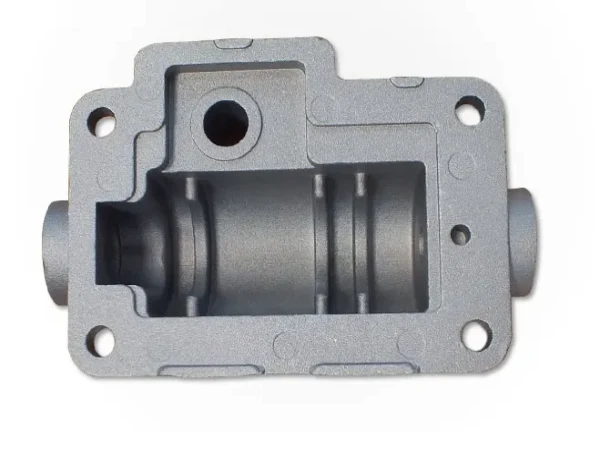
To successfully implement a prototype aluminum sand casting project, it is necessary to establish a comprehensive quality control system that covers every stage from metallurgical preparation to final physical inspection. For critical automotive applications, the integrity of the internal structure is just as important as external dimensional accuracy. By implementing strict casting controls during the melting and pouring stages, subsurface defects can be systematically eliminated. This rigorous engineering oversight ensures that the aluminum sand casting process produces high-performance prototype components that perform identically to production parts under demanding road test conditions.
Metallurgical integrity in prototype aluminum sand casting runs
Achieving exceptional metallurgical integrity in the production of prototype aluminum sand casting requires precise melt control and effective dehydrogenation. Before pouring the molten A356 alloy, foundries use a rotary nitrogen degassing method in conjunction with ceramic foam filters to remove oxide inclusions. This rigorous purification process ensures that the molten metal does not introduce harmful impurities into thin-walled sections as it fills the sand mold. As a result, the solidified aluminum forms a dense, uniform matrix free of microscopic porosity, which directly maximizes the component’s tensile strength.
Defect prevention for highly stressed sand casting components
For high-stress castings, such as suspension control arms or engine blocks, defect prevention depends largely on the optimization of the gating system. Engineers use advanced thermal simulation software to analyze the flow velocity of molten metal in order to avoid turbulent filling. This careful design ensures that the aluminum sand castings solidify in a controlled manner, allowing additional metal to be drawn in through the risers and preventing the formation of shrinkage cavities. As a result, the final automotive prototype parts are able to withstand severe cyclic fatigue during track testing without experiencing unexpected structural failure.
Testing protocols for evaluating prototype aluminum sand casting
Implementing strict testing procedures for prototype aluminum sand castings ensures that the physical component fully complies with international automotive standards. Technicians perform non-destructive testing, including digital X-ray inspection and penetrant testing, to detect subsurface defects in the metal blank. Additionally, a coordinate measuring machine verifies that the component meets the specified sand casting tolerances on all complex mating surfaces. These objective verification steps provide confidence in the structural limits of the prototype before on-site assembly begins.
¿Busca una fundición de metales confiable en China?
- Podemos ayudarte a optimizar diseño de productos y reducir costos.
- Podemos ayudarte con alta calidad y gran volumen piezas de fundición.
- Podemos entregar a tiempo y conseguir más oportunidades en el mercado de ventas.
- Usted se beneficiará de Supro MFG fundición de metales servicio.
Comuníquese con Supro MFG
This article systematically analyzes the core value of sand casting in the rapid development of automotive powertrains, covering everything from the metallurgical control of prototype aluminum sand castings and the digital acceleration of pattern making to the precise alignment of sand casting tolerances with subsequent CNC machining. This technical approach effectively shortens the validation cycle for complex components such as engine blocks and transmission housings.
Supro MFG integrates these capabilities into end-to-end engineering services, ranging from optimizing pattern making based on CAD models and controlling the melting of aluminum sand casting alloys such as A356 to inspecting and ensuring the casting tolerances of the final castings. Whether for cast prototypes used in bench testing or subsequent transition to mass production, Supro MFG provides one-stop support that complies with the IATF 16949 standard. Please contact the Supro MFG engineering team to receive a professional technical review tailored to your powertrain project.
 English
 Français
 Deutsch
 Italiano
 日本語
日本語 한국어
한국어 Polski
 Português de Angola
 Русский
 Español de Argentina