
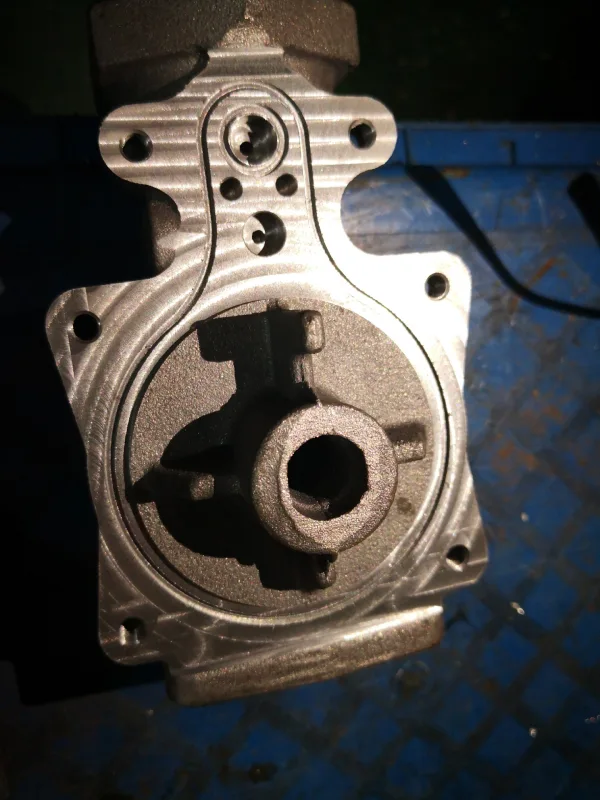
Amid the trend toward automotive weight reduction, sand casting remains one of the primary processes for producing aluminum alloy structural components. However, what truly determines casting quality and yield is the precise control of parameters throughout the entire process. From melting to solidification, deviations at any stage can lead to porosity, shrinkage, or dimensional deviations. This article will systematically outline the key control points for sand casting process parameters: First, it analyzes pouring thermal management and solidification rate control; next, it discusses the balance between binder composition, loss on ignition, and permeability in resin sand casting; then, it introduces the application of sand casting tools—such as ceramic filtration, real-time temperature measurement, and 3D scanning—in quality monitoring; finally, it explains how to integrate these parameters into a closed-loop control system through simulation verification and on-site parameter tuning. The following sections will analyze how to ensure the structural integrity of complex, thin-walled parts while maintaining the stability of high-volume production.
Fundamental sand casting process parameters for aluminum alloys
Selecting the correct sand casting process parameters is critical for producing automotive aluminum alloys with high structural integrity. First, it is necessary to balance the thermodynamics of pouring, cooling rates, and mold gas behavior to ensure the structural integrity of complex parts. Controlling these variables effectively prevents defects such as hydrogen porosity, micro-shrinkage, and cold shuts. When manufacturing critical powertrain or structural components, precise parameter optimization ensures consistent mechanical properties, strict dimensional accuracy, and repeatable metallurgical quality throughout high-volume production.
Thermal management during aluminum sand casting molten liquid pouring
In the aluminum sand casting process, precise control of the pouring temperature affects metal fluidity and the risk of gas entrapment. For common automotive alloys such as A356, maintaining the temperature of molten aluminum between 680°C and 720°C prevents premature solidification while minimizing hydrogen solubility. If the pouring temperature falls below this range, it often leads to gate overflow and cold shuts; conversely, excessively high temperatures can accelerate alloy oxidation and result in coarse grain size. Immersion thermocouples and automatic pouring ladles can be used to maintain a stable filling rate between 0.2 and 0.4 m/s, thereby suppressing turbulence within the mold cavity.
Solidification velocity control in high-grade aluminum sand casting
To achieve optimal mechanical properties in sand casting, the solidification rate of the metal must be strictly controlled. Through rapid directional cooling, the secondary dendrite arm spacing (SDAS) can be reduced to less than 30 micrometers, thereby significantly improving the tensile strength and fatigue resistance of aluminum components. By positioning internal or external cooling rods made of steel or copper near the junctions of thick walls to accelerate local heat removal, and by combining directional cooling with an insulated sprue to create a steep temperature gradient, continuous pouring is facilitated, and micro-shrinkage porosity is eliminated during the transition from the liquid to the solid phase.
Gas evolution monitoring in precision resin sand casting systems
In modern resin sand casting systems, controlling gas release from the mold is critical to preventing internal porosity. Chemical binders such as furan or phenolic-polyurethane decompose upon contact with molten aluminum, and the resulting gases must escape before the metal surface solidifies. By measuring loss on ignition (LOI) and keeping the binder content below 1.2%, a balance can be achieved between mold collapse performance and low gas generation. Maintaining the sand permeability at 150 AFS GFN or higher and establishing artificial venting channels allows gases to escape smoothly, ensuring that automotive sand casting parts are dense and free of porosity.
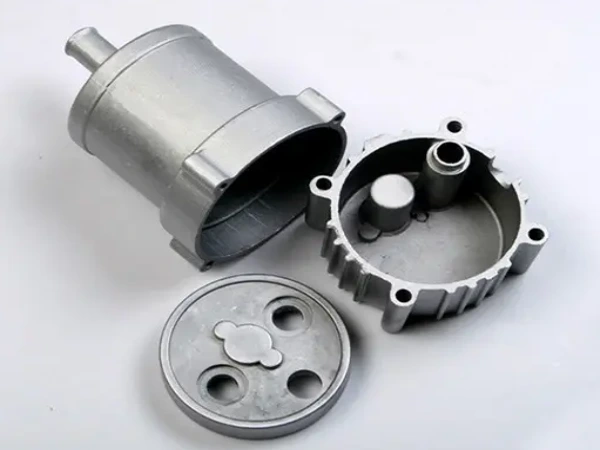
Resin sand casting binder ratios and mold atmosphere regulation
Precise control of the chemical binder and gas behavior within the mold cavity is key to the success of resin sand casting for automotive structural components. Systematically optimizing the ratio of synthetic resin to catalyst ensures sufficient mold strength while preventing the generation of excessive core gases. By controlling organic additives, the atmosphere within the mold can be stabilized directly during the high-temperature pouring of molten aluminum. This rigorous approach minimizes thermal expansion defects, reduces carbon adsorption, and prevents severe gas entrapment. Consequently, it is crucial to ensure reliable sand release, clean casting demolding, and consistent dimensional repeatability throughout high-volume sand casting production cycles.
Binder dosage optimization for structural resin sand casting stability
In resin sand casting, an optimized chemical binder formulation prevents mold deformation while ensuring reliable core sand release. This is achieved by setting the furan or phenolic resin content to 0.8% to 1.2% of the total sand weight and adding a liquid catalyst equivalent to 30% to 50% of the binder volume. This formulation ensures that a tensile strength of 1.5 to 2.0 MPa is achieved within two hours of mixing. Maintaining these precise proportions provides sufficient mechanical rigidity to withstand the pressure of molten aluminum while ensuring easy mold release after the molten aluminum solidifies.
Loss on ignition control in resin sand casting operations
Monitoring loss on ignition (LOI) during the testing of sand casting process parameters is critical for preventing gas-related defects in automotive components. When metal comes into contact with high temperatures, it decomposes the organic binder, releasing volatile gases into the mold cavity. By placing samples of recycled sand in a muffle furnace and testing them at 950°C, it is possible to ensure that the total loss on ignition (LOI) remains below 1.5%. Finally, strictly controlling the organic content within this threshold prevents the generation of excessive gases, thereby reducing pinholes and ensuring that the cast aluminum housings maintain good structural integrity.
Sand permeability management in resin sand casting processes
Maintaining the correct sand porosity during the sand casting process ensures that pyrolytic gases are safely vented without infiltrating the molten aluminum stream. Porosity of 150 units or higher is achieved by balancing the particle fineness value (typically 50 to 60 AFS) and dust content. Next, use a pneumatic testing tool to measure the sand mold’s permeability before pouring. Deliberately placing vent holes in deep cavities can further reduce local gas pressure, resulting in a smooth surface and a dense internal microstructure of the aluminum.
Essential sand casting tools for automotive quality control
In the production of automotive aluminum parts, the use of high-precision sand casting tools is critical for maintaining strict quality control. A variety of specialized equipment is now available, such as in-line spout filters, advanced thermal sensors, and 3D measurement devices. These tools can filter out non-metallic inclusions, monitor cooling curves in real time, and verify precise geometric contours prior to machining. Integrating calibrated tooling into daily operations not only eliminates subjective guesswork and improves process stability but also prevents inclusions or dimensional drift beneath the surface of sand-cast parts, thereby meeting the stringent IATF 16949 quality standards.
Modern ceramic foam filtration in aluminum sand casting tools
Integrating ceramic foam filters into specialized aluminum sand casting gating systems can trap non-metallic oxide slag before it enters the mold cavity. Casting operators place silicon carbide or alumina filters with a pore size of 10 to 20 PPI (pores per inch) within the gating network to reduce turbulence in the molten metal. The filters also stabilize the molten metal flow field, thereby preventing secondary oxidation and the entrapment of oxide slag in thin-walled automotive components. The use of appropriate filtration tools can significantly reduce scrap rates caused by hard spots and oxide inclusions, ensuring that aluminum castings are pure and of reliable quality.
Temperature sensing sand casting tools for real-time thermal analysis
Sand casting tools that incorporate thermal analysis probes as their core component enable foundry technicians to exercise precise, real-time control over melt quality and cooling curves. Prior to pouring, a Type K thermocouple is immersed directly into a sampling cup containing molten aluminum to assess the degree of grain refinement and the level of eutectic modification.
Inside the sand casting tools, embedded thermal sensors record cooling rates to identify the risk of micro-segregation before shaking out. This real-time thermal feedback helps technicians promptly adjust holding times and degassing protocols within the furnace, ensuring that every batch of castings exhibits predictable metallurgical properties.
Dimensional measurement sand casting tools for automotive structural inspection
By using 3D optical scanning and coordinate measurement technology, combined with a set of tools for analyzing sand casting process parameters to inspect complex components, dimensional accuracy can be ensured across automotive production batches. Quality control inspectors scan raw castings to generate detailed 3D color maps and compare actual dimensions with the target CAD model to detect sand mold wear or mold deformation. Mechanical gauges and ultrasonic thickness gauges are used to verify the boundaries of critical wall surfaces within internal passages. Verifying mold dimensions early on not only prevents costly cutting tool collisions but also ensures precise positioning during the final assembly of automotive chassis.
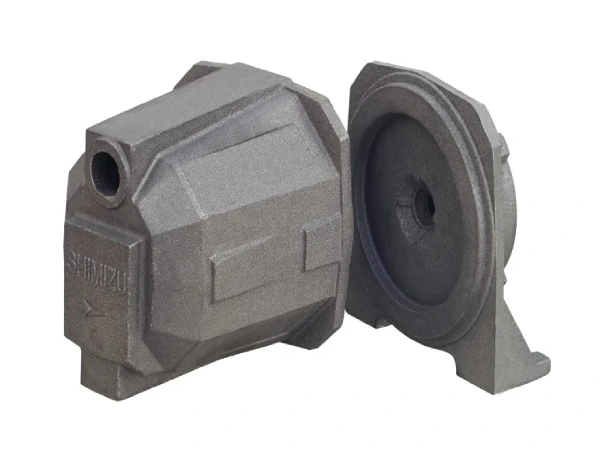
Integrating process parameter optimization into sand casting parts manufacturing
Applying optimized parameters to mass production requires a structured engineering approach for each manufacturing stage of automotive sand-cast parts. First, before finalizing the design, thermodynamic and fluid dynamic characteristics are verified using simulation models to ensure that the actual pouring process aligns with the predicted cooling behavior. Next, by continuously monitoring the cavity sand-filling rate, sand moisture content, and solidification timing, localized defects in complex shells and structural frames are prevented. Establishing this rigorous feedback loop ensures that sand casting process controls directly improve part density, fatigue resistance, and dimensional compliance, thereby achieving high structural integrity and long-term durability for automotive components.
Process parameter validation for critical aluminum sand casting parts
By validating the parameters of the precision sand casting process through MAGMA software simulations and pre-production test castings, defects that could result in significant losses can be effectively avoided. By simulating molten metal flow patterns and solidification kinetics, potential areas of turbulent filling or localized overheating can be identified early in the development phase. Subsequently, real-time thermal analysis and metallurgical sampling are conducted during prototype test castings, and gate dimensions and pouring rates are adjusted accordingly. This dual-verification approach ensures that the production setup can consistently produce defect-free, high-quality aluminum castings that strictly comply with Tier 1 automotive engineering requirements.
Defects minimization in complex automotive sand casting parts
To minimize internal defects in complex aluminum sand castings, the key lies in maintaining a balanced thermal gradient during the phase transition. By optimizing riser dimensions and strategically placing chill blocks, directional solidification toward the gating pool is promoted, thereby preventing micro-shrinkage in thick-walled sections. Furthermore, using a rotating argon torch to control degassing of the molten metal can limit hydrogen content to less than 0.12 milliliters per 100 grams of aluminum. Combining controlled degassing with a laminar pouring rate eliminates gas and oxide inclusions, ensuring the formation of a dense internal microstructure within the complex geometries of automotive housings.
Structural integrity standards for automotive sand casting parts
To verify the structural integrity of safety-critical sand-cast components, rigorous non-destructive testing and mechanical property evaluations must be conducted. The quality team performs X-ray transmission testing and penetrant testing in accordance with ASTM standards to confirm internal integrity, while verifying yield strength and elongation limits through tensile testing of specimens. Chassis and suspension structural components must be able to withstand severe dynamic fatigue and resist the formation of microcracks under heavy-load conditions. To ensure these components achieve their maximum mechanical performance following defect-free casting, please review our inspection methods for [Engineered Sand Casting Parts for Dominant Automotive Chassis Applications].
Szukasz niezawodnej odlewni metali w Chinach?
- We can help you optimize product design and save costs.
- Możemy pomóc Ci w realizacji dużych zamówień o wysokiej jakości części odlewane.
- Możemy dostarczyć na czas i zyskać więcej możliwości rynkowych sprzedaży.
- Skorzystasz na współpracy z Supro MFG odlewanie metali serwis.
Contact Supro MFG
This paper systematically analyzes the core process chain of sand casting in the manufacturing of automotive aluminum alloy components and reveals the decisive influence of sand casting process parameters on casting density and fatigue life. By optimizing the binder formulation and controlling the loss on ignition in resin sand casting, combined with sand casting tools such as ceramic filtration and real-time thermal analysis, hydrogen porosity and micro-shrinkage defects can be effectively suppressed, ensuring that complex structural components meet the dimensional and mechanical standards of IATF 16949. In actual production, by leveraging a dual-track approach combining MAGMA simulation and trial casting validation, and by integrating thermal gradient management with laminar pouring, directional solidification can be made more controllable.
Supro MFG offers high-precision sand casting services that integrate advanced processes with strict parameter control to deliver high-quality aluminum alloy components that meet international engineering standards. Partner with our engineering team to optimize performance, ensure dimensional tolerances, and shorten lead times. Please contact us for customized solutions.
 English
 Čeština
 Français
 Deutsch
 Italiano
 日本語
日本語 한국어
한국어 فارسی
فارسی Polski
 Português de Angola
 Русский
 Slovenčina
 Español de Argentina
 Українська