
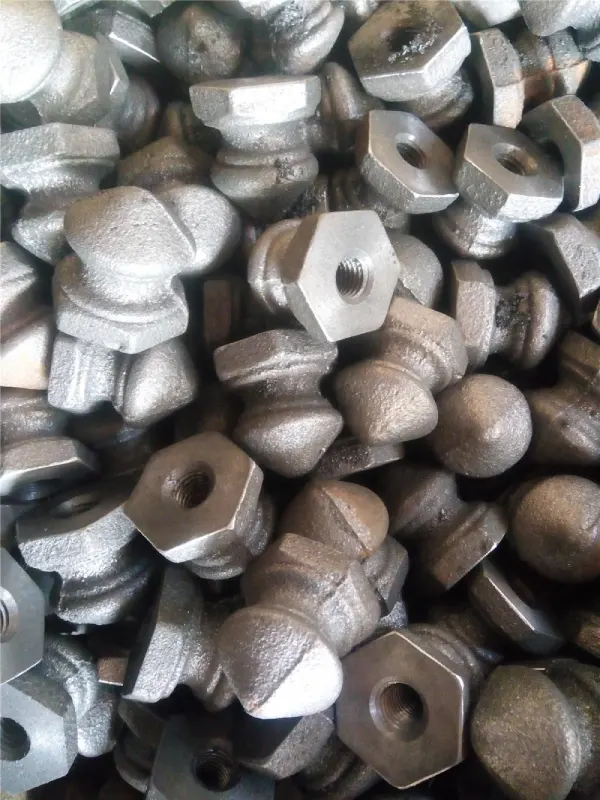
As the trend toward lightweighting in new energy vehicles accelerates, motor and transmission housings are placing higher demands on the dimensional stability of sand castings. This article describes the core design approach for achieving high-precision sand casting parts: mitigating thermal stress through uniform wall thickness and fillet transitions; strictly defining the minimum wall thickness for sand casting and ensuring proper filling of thin walls through gradual tapering and core support; controlling sand casting shrinkage via shrinkage compensation and thermal gradient balancing; and ensuring machining accuracy through DFM simulation and fixture optimization. Together, these measures form a comprehensive technical framework for ensuring dimensional stability in housings. The following sections will analyze the actual settings for each parameter and the corresponding process validation methods in detail.
Fundamental sand casting design principles for automotive structural housings
Applying reliable sand casting design rules is critical to maintaining the strict geometric tolerances of electric vehicle (EV) motor housings and transmission housings. Thermal stresses during alloy solidification are mitigated by balancing wall thickness uniformity, rib placement, and internal fillet radii. If wall thickness variations are not effectively controlled, they often lead to uneven cooling rates, which can cause post-demolding deformation or localized porosity in thin-walled housings. By optimizing the structural geometry during the initial CAD design phase, foundries can mitigate internal stress concentrations and ensure smooth molten metal filling. As a result, these structural housings not only achieve high dimensional stability but also simplify secondary machining setups and maintain reliable long-term performance under demanding operational loads.
Wall thickness optimization in EV motor sand casting design
Optimizing wall thickness parameters during the sand casting design process for electric vehicle motors can prevent localized shrinkage porosity and thermal deformation. At the same time, the wall thickness of the motor stator housing should be maintained uniformly between 5.0 and 8.0 millimeters to ensure even heat dissipation and stable cooling performance. When geometric adjustments are necessary, a 1:4 tapered transition design can be used to avoid severe thermal gradients between thick mounting tabs and thin outer walls. Maintaining uniform wall thickness reduces internal residual stresses, ensuring that the cast motor housing retains precise cylindrical concentricity after cooling and final machining.
Rib pattern layout for thin-wall sand casting design
Designing symmetrical ribs inside thin-walled sand castings not only improves structural rigidity but also prevents the formation of thermal stress concentration points. By designing the rib thickness to be 0.6–0.8 times that of the adjacent main wall, it is possible to prevent sink marks caused by localized metal accumulation. A grid-like or diagonal rib layout not only distributes mechanical operating loads evenly across the electric vehicle transmission housing but also provides artificial flow paths for molten aluminum during the pouring process. A well-designed rib structure increases the section modulus, prevents deformation of the sand-cast housing, and maintains precise dimensional stability under dynamic vehicle loads.
Fillet radius selection in complex housing sand casting design
When modeling complex sand casting shells, selecting a larger fillet radius can eliminate sharp internal corners that cause hot cracks. At wall intersections, the internal fillet radius should range from 3.0 mm to 6.0 mm and be matched to the local section thickness. Smooth transitions not only prevent localized stress concentrations during solid-state thermal contraction but also reduce erosion of the sand core during metal pouring. The use of smooth fillet transitions helps heat dissipate evenly throughout the sand matrix, thereby protecting complex automotive body panels and preventing the formation of microcracks at internal corner joints.
Managing sand casting minimum wall thickness in aluminum housings
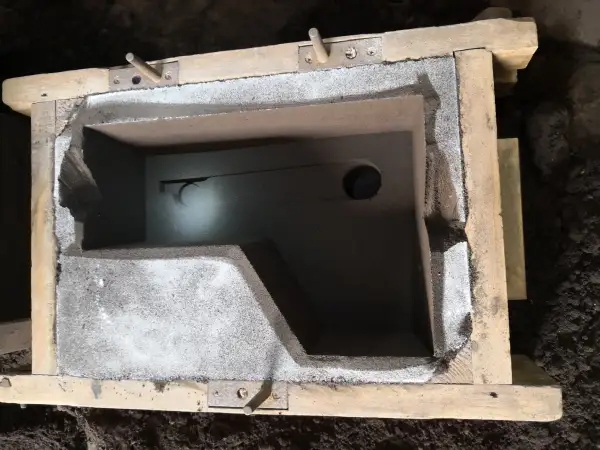
When manufacturing large, lightweight aluminum automotive housings, controlling the sand casting minimum wall thickness is critical. By evaluating the alloy’s fluidity, filling distance, and heat loss, it is possible to prevent gate defects or cold shuts in thin-walled areas. Setting appropriate thickness thresholds ensures that molten aluminum completely fills the entire mold cavity before solidification. By incorporating gradual tapered transitions and rigid core support structures, localized cooling and core displacement can be avoided during high-velocity metal flow. Striking a balance between cross-sectional thickness and process capabilities results in dense, defect-free shell walls, optimizes overall component weight, and maintains structural rigidity for demanding automotive applications.
Fluidity limits for sand casting minimum wall thickness in aluminum
Establishing reasonable minimum wall thickness limits for aluminum housings in sand casting can prevent cold shuts and incomplete cavity filling. For common automotive alloys such as A356, which are poured at temperatures between 700°C and 720°C, the practical minimum wall thickness range is 4.0 mm to 5.0 mm for longer runner distances. If the wall thickness is less than 3.5 mm, the molten aluminum will cool rapidly upon contact with the sand mold wall, thereby increasing surface tension and impeding metal flow. Adhering to these flowability limits ensures complete filling of complex motor housings and maintains uniform wall thickness density.
Tapered transitions for sand casting minimum wall thickness control
When applying sand casting design rules to the design of thin-walled aluminum housings, using a gradual, gentle transition in wall thickness can improve melt flow. Applying a 1:4 taper at the junction between thin-walled sections and thick mounting tabs or oil passages creates a smooth transition that prevents sudden flow resistance, reduces melt turbulence, and avoids localized thermal stress concentrations during solidification. Utilizing a gradual wall-thickness taper ensures a continuous flow rate of the metal in thin-walled areas, which not only prevents gate loss but also protects the aluminum housing from thermal tearing during solid-state cooling.
Core support strategies for deep-cavity sand casting minimum wall thickness
In the deep-cavity sand casting process, securely fixing the sand core prevents core displacement and uneven wall thickness. By arranging precision core boxes, metal core sleeves, and a high-rigidity resin sand mixture, the buoyancy generated by rising molten aluminum can be counteracted. Maintaining precise core alignment prevents thin walls from falling below sand casting tolerance requirements during pouring. Secure core anchoring ensures uniformity in the 4.5-millimeter wall thickness of the internal cooling sleeve, thereby eliminating structural failure in thin-walled areas and ensuring high-pressure sealing of the automotive casting housing.
Controlling volumetric sand casting shrinkage in complex enclosures
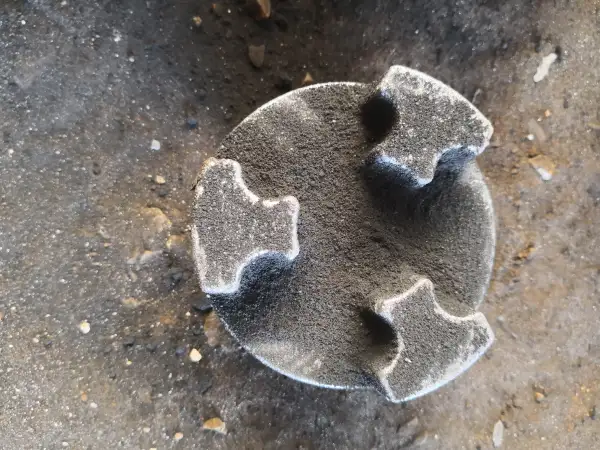
Controlling volumetric sand casting shrinkage is critical for maintaining the geometric accuracy of complex automotive housings. Metal solidification shrinkage and solid-state cooling shrinkage cause internal dimensional changes that can lead to deformation in thin-walled electric vehicle motor housings. The effects of these thermal phenomena can be mitigated by precisely calculating model shrinkage allowances, balancing cooling gradients, and implementing post-casting heat treatment for sand castings. Managing heat dissipation through targeted cooling measures prevents localized shrinkage porosity from forming in thick-walled mounting areas. Consequently, systematic shrinkage control eliminates internal microporosity, stabilizes the final component dimensions, and ensures that the casting does not warp during secondary milling operations, thereby meeting stringent machining tolerance requirements.
Solidification contraction scaling in sand casting shrinkage control
By predicting the material shrinkage rate in sand casting shrinkage tests, CAD models can be scaled accurately. Aluminum alloys such as A356 have a volumetric solidification shrinkage rate of approximately 3.5% to 4.0% and a linear thermal shrinkage rate of 1.2% to 1.3%. Anisotropic scaling factors are applied to complex motor housing models to compensate for the effects of sand core constraints that limit the natural flow of metal. Calculating precise shrinkage allowances ensures that the cast motor housing conforms to the drawing dimensions after complete cooling, thereby preventing dimensional deviations and reducing unnecessary secondary machining allowances.
Thermal gradient balancing to prevent non-uniform sand casting shrinkage
Balancing the temperature gradient within the mold cavity prevents uneven shrinkage of sand casting parts in areas of the shell with varying thicknesses. By positioning the cooling plate directly against the thick bearing boss while insulating the thin-walled sections, directed cooling toward the gate and riser is established. At the same time, ensuring a consistent cooling rate throughout the solidifying aluminum prevents differential thermal shrinkage, which would otherwise cause the housing to warp or crack at the intersections of the reinforcing ribs. Establishing a uniform heat dissipation mechanism stabilizes the geometric profile, ensuring that large electric vehicle transmission housings retain flat mounting surfaces and precise hole alignment even after being ejected from the mold.
Stress relief annealing impact on residual sand casting shrinkage
Stress-relief heat treatment stabilizes raw sand casting parts prior to final precision CNC machining. Holding the cast aluminum housings at a temperature of 200°C to 240°C for three to five hours eliminates internal residual stresses caused by uneven cooling during solidification. Eliminating these thermal stresses prevents the component from warping or exceeding tolerance limits due to elastic deformation when a large amount of material is removed during milling. Thermal stress relief treatment ensures long-term dimensional stability and guarantees that critical bearing bores maintain their roundness during vehicle operation.
DFM validation for precision automotive sand casting parts
Conducting Design for Manufacturability (DFM) validation ensures high precision in the production of complex sand casting parts for automotive structural applications. The engineering team combines finite element thermal stress simulation, optimized CNC machining setups, and reliable mold material selection to verify dimensional compliance before cutting physical prototypes. Early validation of part geometry identifies potential risks of cooling deformation, uneven machining allowance distribution, and clamping deflection issues in thin-walled housings. This comprehensive virtual and mechanical analysis not only streamlines the prototype testing process and reduces mold modification costs but also delivers stable, tight-tolerance aluminum housings that directly meet the demands of automotive mass production.
Distortion simulation for high-precision sand casting parts
Using finite element analysis (FEA) software to predict thermal deformation in high-precision sand casting parts can help avoid costly mold modifications during prototype production. By simulating the temperature field and residual stress evolution during alloy cooling, it is possible to identify localized warping of the housing or flange distortion in complex electric vehicle motor housings. Modifying wall transition angles or adjusting rib layouts based on simulation results can compensate for differential shrinkage before the metal mold is cut. Virtual deformation modeling ensures that green castings strictly conform to nominal CAD dimensions, thereby minimizing the need for secondary machining allowances.
Machining setup optimization for thin-walled sand casting parts
A CNC machining fixture optimized for thin-walled sand casting design prevents workpiece deflection during high-speed face milling. By employing a pneumatic flexible clamping device and a “3-2-1” reference positioning scheme, the fixture ensures a secure grip on the flexible aluminum housing while preventing mechanical deformation. Hydraulic support pins reinforce the outer surface of the thin-walled component, absorbing cutting forces and thereby preventing chatter marks and out-of-round holes. A well-designed fixture ensures that the sealing surfaces of cast transmission housings remain flat and that hole alignment is precise during high-volume secondary finishing operations.
Tooling material influence on structural sand casting parts
Selecting high-rigidity pattern equipment helps maintain critical dimensions when producing complex sand casting housings. Machined aluminum or ductile iron patterns can withstand the compressive forces of sand grains and consistently maintain strict ISO 8062 CT6 tolerances over tens of thousands of molding cycles. In addition to optimizing the geometry of sand-cast parts, selecting mold materials with a matching coefficient of thermal expansion remains critical for controlling cooling uniformity and dimensional stability. To learn how mold materials—such as metal molds or ceramic sand—affect heat transfer rates and dimensional tolerances during the pouring process, please refer to our technical evaluation report [Mastering Sand Casting Mold Materials for Flawless Automotive Aluminum].
Hledáte spolehlivou čínskou kovodlévarnu?
- We can help you optimize product design and save costs.
- Můžeme vám pomoci s velkými objemy v vysoké kvalitě odlitkové díly.
- Dokážeme dodat včas a získat další příležitosti na prodejním trhu.
- Získáte výhodu díky Supro MFG kovolitectví služba.
Contact Supro MFG
This paper systematically analyzes the core elements of sand casting design for automotive structural shells. By optimizing wall thickness uniformity, rib layout, and fillet radii, sand casting shrinkage and thermal stress can be effectively controlled. At the same time, strictly defining the minimum wall thickness for aluminum alloy sand castings, combined with gradual transitions and core support strategies, ensures complete filling and structural rigidity in thin-walled areas. These design principles, together with DFM verification methods, form the technical foundation for the production of high-precision lití do písku časti.
Leveraging 28 years of casting experience and the ISO/TS 16949 certification system, Supro MFG provides end-to-end technical support—from design optimization to mass production—for electric vehicle motor housings and transmission housings. Through process techniques such as shrinkage compensation calculations, thermal gradient balancing, and stress-relief annealing, we ensure that castings maintain strict dimensional stability even after cooling and machining. Please contact Supro MFG for professional technical design consulting and cost-optimization solutions.
 English
 Čeština
 Français
 Deutsch
 Italiano
 日本語
日本語 한국어
한국어 فارسی
فارسی Polski
 Português de Angola
 Русский
 Slovenčina
 Español de Argentina
 Українська