
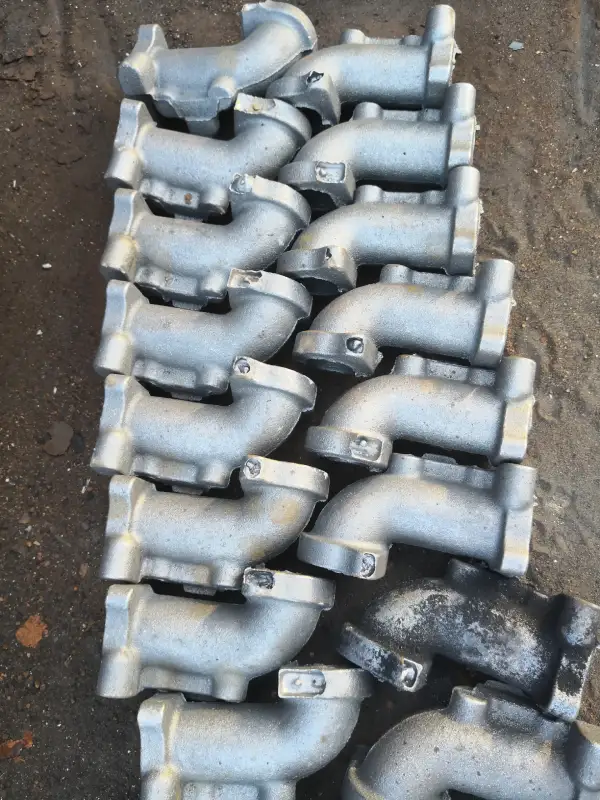
As the demands for lightweight design and fatigue durability in automotive chassis and suspension structural components become increasingly stringent, sand casting—with its ability to produce complex shapes and high material utilization—has emerged as a key alternative to traditional steel components. This paper describes how to systematically control the microstructure—including refining the spacing between secondary dendrite arms and strontium-modified eutectic silicon—to enhance tensile strength and impact toughness by optimizing the filling path and local cooling gradients in aluminum sand casting. At the same time, by combining reference positioning strategies with core precision control, sand casting tolerances are stabilized at the ISO 8062 CT7 grade, reducing machining allowances and ensuring assembly alignment. Furthermore, process measures such as melt degassing, chill placement, and gating system design can effectively eliminate internal porosity and shrinkage, ensuring that cast chassis components pass rigorous non-destructive testing. The following sections will analyze, layer by layer—from materials and processes to validation—how these technologies work in concert to achieve mass production consistency.
Fundamental sand casting parts engineering for automotive chassis safety
The manufacture of safety-critical sand casting parts for automotive chassis systems requires strict adherence to metallurgical integrity and dynamic load standards. Chassis components such as steering knuckles, control arms, and subframe joints are subjected to continuous multi-axial stresses, road impacts, and fatigue cycles during operation. By utilizing high-strength A356-T6 aluminum alloy and precision sand casting processes, it is possible to achieve uniform density and eliminate internal porosity. At the same time, by optimizing filling paths and solidification processes in conjunction with controlled cooling gradients, sand casting enables lighter-weight designs compared to traditional steel forgings. These engineered aluminum components ensure operational safety, enhance vehicle handling performance, and maintain long-term reliability under demanding driving conditions.
Steering knuckle production using aluminum sand casting parts
Manufacturing steering knuckles using the aluminum sand casting process provides an excellent strength-to-weight ratio for the vehicle’s front suspension. By using high-density resin sand molds and installing cooling plates near the heavy-duty journal connection points to accelerate solidification, as well as controlling the local cooling rate to optimize the internal grain boundary structure, the blank achieves a tensile yield strength exceeding 230 MPa after heat treatment.
Integrating the steering arm, brake caliper bracket, and ball joint interface into a single casting eliminates the need for multi-piece welded assemblies, providing high torsional stiffness and resistance to dynamic loads for the critical vehicle steering system.
Suspension control arm manufacturing via sand casting parts
By optimizing the sand casting process for the production of suspension control arms, automotive engineers can manufacture complex hollow-section structures, thereby reducing unsprung mass. The use of high-strength ceramic sand cores creates smooth internal passages, ensuring uniform wall thickness distribution across the load-bearing arms. Additionally, the bottom-gated runner layout employed during casting minimizes turbulence and prevents oxides from accumulating in thin-walled areas.
Cast aluminum control arms undergo 100% X-ray inspection to verify internal integrity, ensuring that the final structural components can easily meet stringent automotive fatigue test requirements under cyclic road loads.
Subframe structural nodes engineered as aluminum sand casting parts
Transforming the complex subframe joint design into a one-piece sand casting node not only simplifies the assembly process for multi-material body assemblies but also enhances the joint’s rigidity. These structurally complex hollow castings serve as structural connection points, directly attaching suspension control arms, steering racks, and powertrain mounts to the vehicle chassis. Furthermore, the use of precision core assemblies enables the creation of complex internal ribbed geometries, ensuring that impact forces are evenly distributed throughout the node structure. Replacing multi-piece stamped steel brackets with a single-piece cast aluminum node not only reduces the total weight of the subframe by up to 30% but also improves dimensional alignment accuracy at critical chassis mounting points.
Metallurgical integrity and sand casting microstructure control in suspension components
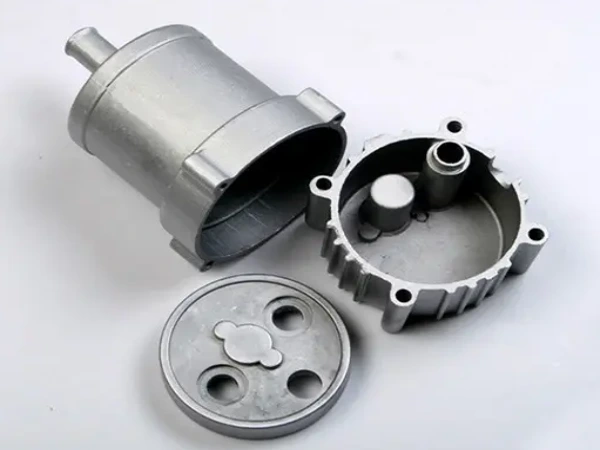
Optimizing the microstructure of sand castings is critical to ensuring that aluminum suspension components do not develop microcracks when subjected to severe fatigue loads. Metallurgical engineers control grain boundaries and phase distribution by regulating local solidification cooling rates, chemical treatment of the melt, and post-casting tepelné zpracování. By reducing the spacing between secondary dendrite arms and transforming brittle silicon needles into fine fibrous structures, the material’s toughness can be significantly improved. In addition, artificial aging treatment can optimize the dispersion of precipitates within the aluminum matrix. By controlling these microstructural variables, it is possible to produce dense, high-integrity castings that provide automotive suspension systems with exceptional mechanical strength and dynamic fatigue performance.
Secondary dendrite arm spacing optimization in sand casting microstructure
Optimizing the secondary dendrite arm spacing (SDAS) in the sand casting microstructure can directly improve the fatigue life of aluminum control arms. By placing copper or water-cooled cast iron cooling cores within the sand mold cavity near areas with thicker geometric cross-sections, heat is rapidly removed during solidification.
Rapid heat conduction enables a local cooling rate exceeding 5°C per second, thereby reducing the SDAS value to below 25 micrometers. This fine-grained dendritic network reduces the distribution of microporosity and intermetallic segregation, significantly improving the ultimate tensile strength and elongation properties of critical vehicle suspension components.
Eutectic silicon modification for structural sand casting microstructure
The use of strontium chemical modification technology can alter the eutectic silicon phase in the aluminum sand casting matrix, thereby preventing premature brittle fracture under dynamic loads. Prior to pouring, a master alloy containing 0.015% to 0.020% strontium is added to the molten A356 aluminum. This chemical treatment transforms sharp, needle-like silicon structures into rounded, fibrous particles that are uniformly dispersed within the primary aluminum dendrites. The change in silicon morphology improves the material’s ductility and impact resistance, ensuring that the cast suspension control arms deform as intended—rather than fracturing immediately—when subjected to sudden road impacts.
Heat treatment effects on high-fatigue sand casting microstructure
Applying a T6 heat treatment process to castings can optimize the mechanical properties of sand casting parts used in automotive chassis assemblies. The foundry performs a 6-hour solution treatment at 535°C to ensure uniform distribution of alloying elements, followed immediately by quenching in warm water at 60°C. Artificial aging at 155°C for 4 to 6 hours promotes the uniform precipitation of fine Mg₂Si particles in the aluminum matrix. This controlled heat treatment process increases the yield strength to over 240 MPa while maintaining structural toughness, thereby meeting OEMs’ stringent standards for dynamic fatigue in chassis applications.
Achieving precision sand casting tolerances for automotive chassis mounting
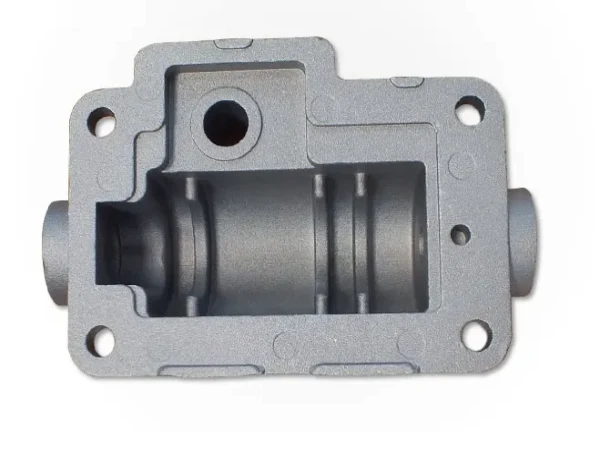
In the automated assembly of automotive chassis and suspension systems, strict control of sand casting tolerances is critical to achieving seamless alignment. By integrating low-expansion resin-bonded sand, rigid CNC-machined metal cores, and precision core positioning assemblies, dimensional drift between different production batches is minimized. Controlling variables such as sand compaction density and thermal shrinkage enables reliable maintenance of casting dimensions within the ISO 8062 CT7 tolerance range.
Strict control of sand casting tolerances directly reduces raw material waste, eliminates the need for additional machining allowances caused by dimensional inconsistencies, and prevents alignment deviations in mounting holes during assembly. Ultimately, repeatable dimensional control ensures that cast chassis components fit perfectly with their corresponding subframes and suspension control arms.
Machining allowance reduction through critical sand casting tolerances
Strict control of sand casting tolerances can reduce excessive machining allowances on critical mounting surfaces. By using high-rigidity phenolic resin sand molds and calibrated metal prototype kits, operators can maintain casting accuracy within the ISO 8062 CT7 standard. Reducing the machining allowance on mating flanges from 3.5 mm to 1.5 mm minimizes raw material consumption while shortening the CNC milling cycle time. Consistent dimensional accuracy also prevents excessive tool wear during secondary machining, ensuring that cast chassis components have flat, smooth mounting surfaces while lowering overall production costs.
Datum positioning strategies to meet tight sand casting tolerances
Establishing a reliable 3-2-1 reference positioning system helps quality teams meet the strict dimensional requirements for sand casting parts during CNC machining and clamping. Integrating casting reference blocks directly into the model layout provides a stable reference surface for subsequent fixture clamping.
Machining shop operators need to use three-point support locators to compensate for tolerance fluctuations in sand casting parts caused by slight thermal deformation or parting line offset. The use of standardized reference locators ensures drilling and face milling accuracy at the suspension mounting points and maintains perfect geometric alignment when the parts are installed onto the vehicle subframe assembly.
Dimensional repeatability verification for structural sand casting tolerances
By verifying dimensional consistency across different production batches, it is possible to confirm that structural sand casting components meet the chassis specifications of automotive original equipment manufacturers (OEMs). By performing automated 3D optical surface scanning and coordinate measuring machine (CMM) inspections on prototype parts, and generating heat maps for comparison with the original CAD geometry, it is possible to verify parting line alignment, core offset variations, and the uniformity of internal channel wall thickness. Additionally, by documenting dimensional repeatability, it ensures that each sand-cast suspension component maintains strict manufacturing tolerances, thereby eliminating assembly fit issues during large-scale automotive mass production.
Hledáte spolehlivou čínskou kovodlévarnu?
- We can help you optimize product design and save costs.
- Můžeme vám pomoci s velkými objemy v vysoké kvalitě odlitkové díly.
- Dokážeme dodat včas a získat další příležitosti na prodejním trhu.
- Získáte výhodu díky Supro MFG kovolitectví služba.
Process optimizations for critical aluminum sand casting parts manufacturing
Optimizing the casting process for critical aluminum sand casting structural components ensures high yield rates and exceptional operational safety. By systematically optimizing melt degassing procedures, mold cooling rates, and melt filling speeds, engineers can eliminate subsurface defects. Controlling hydrogen absorption and slag formation prevents the formation of internal porosity during solidification. At the same time, a well-designed chill accelerates heat dissipation at thick-walled junctions, thereby promoting the formation of a fine-grained microstructure resistant to fatigue cracking. Implementing these sand casting process control measures ensures the stability of mechanical properties during high-volume production. As a result, the company is able to consistently deliver high-density, defect-free chassis castings that all pass rigorous ultrasonic and X-ray non-destructive testing.
Defect mitigation in safety-critical aluminum sand casting parts
To minimize internal porosity and shrinkage defects in safety-critical sand casting parts, precise preparation and degassing of the molten aluminum are required. Injecting argon through a rotating impeller for 15 to 20 minutes prior to pouring can reduce the concentration of dissolved hydrogen to less than 0.10 milliliters per 100 grams of metal. Combining vacuum reduction testing (RPT) with ceramic foam filtration can eliminate oxide slag and gas pinholes. Furthermore, controlling melt purity ensures uniform internal density in thick mounting lugs, enabling the cast control arms to withstand severe dynamic road impact loads without failure.
Mold cooling velocity control for dense aluminum sand casting parts
By controlling the local cooling rate within the mold cavity, the microstructure of sand castings at structural suspension joints can be optimized. Placing heavy cast-iron cooling blocks and highly thermally conductive ceramic sand near thick-walled joints helps balance the heat removal rate. Accelerated heat dissipation prevents the formation of localized hot spots and directs solidification toward the sprue to accommodate shrinkage volume. Establishing a steep thermal gradient eliminates micro-shrinkage porosity in the internal ribs. This targeted thermal control improves the overall tensile strength, yield strength, and fatigue performance of automotive chassis assemblies.
Gating system impact on high-integrity aluminum sand casting parts
Designing pressurized or non-pressurized pouring system layouts for sand casting can prevent turbulence in the molten aluminum as it fills the mold cavity. By calculating the proportions of the gate, runner, and main runner, the metal flow velocity can be controlled to less than 0.5 m/s, thereby suppressing the formation of a secondary oxide layer. Smooth laminar flow not only prevents entrained gas bubbles but also ensures complete filling of cavities in complex structural areas. Internal density depends largely on the fluid dynamics during the pouring process and the mold’s filtration configuration. To learn how liquid metal filtration networks and customized runner configurations eliminate non-metallic inclusions in structural components, please refer to our technical article [Sand casting tools and gating system engineering for automotive castings].
Contact Supro MFG
This paper systematically analyzes the application of sand casting in automotive chassis and suspension structural components. Focusing on core aspects such as metallurgical integrity, microstructural control, lití do písku tolerance control, and process optimization, it explains how to achieve weight reduction goals while ensuring safety through the collaborative design of materials and processes. These engineering practices are driving the evolution of cast chassis components toward higher precision and superior fatigue resistance, while providing a reliable technical foundation for multi-material body integration.
Supro MFG possesses technologies for high-strength aluminum alloys, precision tolerance control, and microstructure optimization, enabling the production of thoroughly validated lightweight sand-cast parts that comply with the IATF 16949 standard. Furthermore, our team of engineers can work directly with customers to optimize the structural performance of chassis components.
 English
 Čeština
 Français
 Deutsch
 Italiano
 日本語
日本語 한국어
한국어 فارسی
فارسی Polski
 Português de Angola
 Русский
 Slovenčina
 Español de Argentina
 Українська