
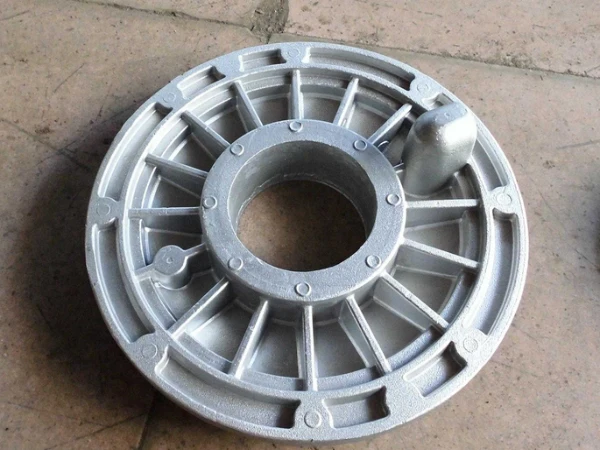
Against the backdrop of ongoing demands for automotive weight reduction and improved performance, sand casting remains the mainstream process for producing complex aluminum structural components, and the appropriate selection of mold materials directly determines casting accuracy and production costs. This article will focus on the requirements of precision automotive aluminum casting to systematically outline the selection logic for sand casting mold—including wooden molds, metal molds, and 3D-printed molds—and introduce the engineering specifications for shrinkage allowance (1.2%–1.5%), machining allowance (1.5–3.0 mm), and wear-resistant coatings in casting mold design; It will also analyze methods for controlling the thermal expansion of silica sand and improving thermal stability using synthetic ceramic sand in resin sand casting, as well as the critical role of the gating system in casting design for eliminating shrinkage defects. The following sections will provide a detailed analysis of how these technical points are implemented in actual mold designs.
Fundamental sand casting mold material selection for automotive tooling
In automotive parts manufacturing, selecting the appropriate sand casting mold material is critical for both dimensional accuracy and cost-effectiveness. When choosing between wooden, metal, or 3D-printed sand mold systems, it is essential to comprehensively evaluate production batch size, part geometry, and heat resistance. While cost-effective wooden molds can be used for small-batch production, large-scale production requires machined aluminum or cast iron molds capable of withstanding repeated sand compaction forces. Modern binder jetting technology further streamlines the rapid prototyping process by completely eliminating the need for physical patterns. Selecting the appropriate mold material based on production volume requirements optimizes dimensional repeatability, controls surface finish, and ensures predictable service life across a wide range of automotive casting projects.
Wood pattern systems in low-volume aluminum sand casting
Selecting mahogany or high-density polyurethane molds for small-batch sand casting design provides a cost-effective approach to initial automotive prototyping. A moisture-resistant epoxy coating is applied to the hardwood to limit dimensional expansion during sand compaction. These wooden mold kits can accommodate rapid geometric changes and consistently meet ISO 8062 CT8 tolerance standards for up to 500 casting cycles. Although they are subject to wear from abrasive silica particles during prolonged operation, wooden molds can significantly reduce upfront mold investment costs during the early stages of automotive powertrain or structural development.
Metal mold tooling for high-volume automotive sand casting
The use of CNC-machined aluminum or ductile iron cores in sand casting mold assemblies ensures exceptional dimensional stability during high-volume automotive production. The metal molds can withstand severe erosion during the high-pressure automatic molding process, consistently maintaining strict ISO 8062 CT6 dimensional tolerances over more than 100,000 cycles. Machined steel wear-resistant inserts installed in high-impact gate areas further prevent localized erosion. Although metal molds require a higher initial capital investment, their superior thermal conductivity and wear resistance ensure consistent geometry and low scrap rates for critical chassis components.
Additive manufacturing sand casting mold systems for rapid prototyping
Using 3D binder jetting technology to manufacture sand casting mold eliminates the preparation time required to create physical models. Industrial-grade 3D printers deposit furan or phenolic resin binders directly onto a bed of fine-grained silica sand or ceramic sand, enabling the direct construction of complex mold cavities from CAD files in just a few hours. This model-less technology enables thin-walled geometries and complex internal draft angles in sand castings—features that are difficult to achieve with traditional molds. Rapid 3D sand printing technology allows engineering teams to evaluate physical aluminum prototypes more quickly, thereby accelerating the vehicle development cycle before final production molds are determined.
Patternmaking techniques for precision aluminum sand casting tooling
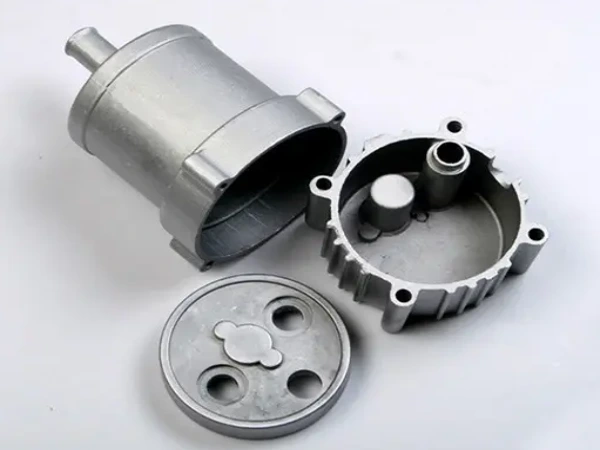
Mastering precision sand casting pattern making techniques is critical to meeting the strict dimensional tolerances of automotive aluminum components. Measures such as accurate conversion of thermal shrinkage coefficients, setting target machining allowances, and applying surface protection treatments ensure the geometric integrity of the patterns. Balancing volumetric shrinkage with mold constraints prevents dimensional deviations in complex housings and brackets. Additionally, the use of wear-resistant coatings during the high-pressure sand compaction process extends the service life of sand قالبهای ریختهگری. Adhering to these pattern-making principles ensures consistent dimensional control, minimizes secondary machining time, and delivers a high-yield mold system that meets stringent automotive quality standards.
Shrinkage allowance integration in precision sand casting pattern making
Taking thermal shrinkage into account during the sand casting pattern making process can prevent aluminum castings from being undersized. Enlarge the CAD model by 1.2% to 1.5% to compensate for the volumetric shrinkage that occurs as A356 or A357 aluminum alloys cool from the solidified state to ambient temperature.
In thin-walled areas, the core restricts the metal’s natural shrinkage; this can be addressed by locally adjusting the scaling factor for these sections. Finally, it is essential to accurately allow for shrinkage to ensure that the casting shell and structural supports conform to the drawing dimensions after complete thermal cooling, thereby reducing rework in subsequent processes.
Machining allowances in automotive aluminum sand casting pattern making
Adding targeted machining allowances during the sand casting mold design phase preserves functional surfaces without adding unnecessary weight to the part. By specifying machining allowances of 1.5 to 3.0 millimeters on mating flanges, sealing grooves, and bearing bores intended for secondary CNC milling—while maintaining uniform machining allowances—this approach prevents excessive tool wear during metal removal and provides sufficient material to correct surface roughness or minor draft angles. This approach ensures defect-free, smooth mating surfaces at critical automotive structural interfaces.
Wear-resistant coatings for high-yield sand casting pattern making
Applying a durable protective coating during the sand casting pattern making process can extend the service life of the mold under high-intensity sand compaction conditions. Coating aluminum or epoxy molds with polyurethane sealing resin or applying a hard nickel plating can help withstand the severe friction caused by abrasive silica particles. These low-friction surface treatments prevent sand particles from adhering, enabling smooth demolding without damaging the fine edges of the mold cavity. By enhancing the wear resistance of the castings and maintaining dimensional consistency over tens of thousands of molding cycles, this approach protects the initial mold investment in the automotive supply chain.
Thermal expansion and mechanical stability in resin sand casting
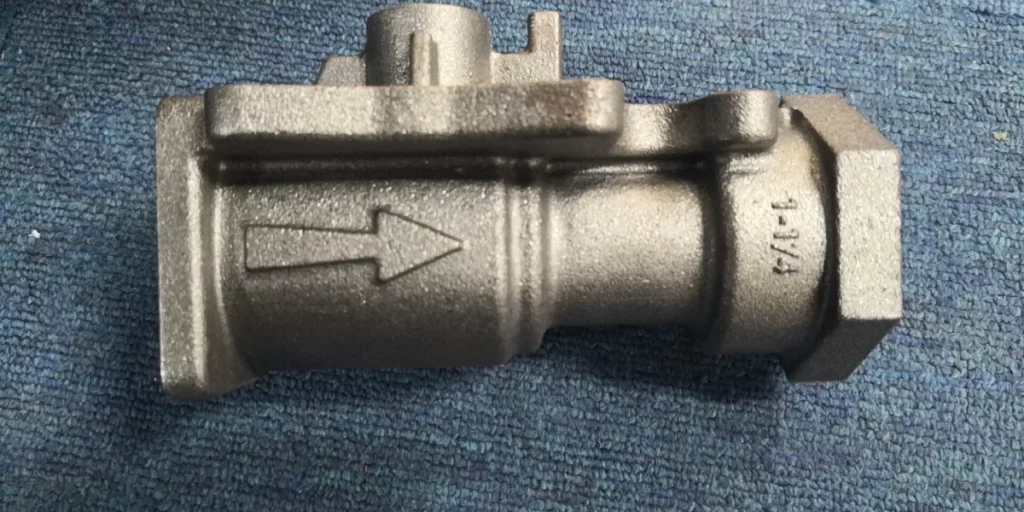
In resin sand casting, controlling the thermomechanical behavior of the sand is critical to preventing dimensional deformation in automotive aluminum parts. High pouring temperatures cause rapid thermal expansion within the sand grains, generating internal compressive stresses that can lead to pulsation defects or mold cracking. By selecting green sand with controllable thermal properties and optimizing the binder composition—ensuring high structural rigidity throughout the solidification process and striking a balance between thermal expansion and binder service life—the integrity of the mold is maintained during pouring. Controlling these physical parameters prevents core displacement, ensures geometric stability, and results in automotive castings with consistent surface quality and free of defects.
Silica sand thermal expansion control in resin sand casting
Controlling the thermal expansion of silica sand during the resin sand casting process can prevent striped defects and dimensional distortion in aluminum parts. Standard silica sand undergoes a dramatic phase transition (α→β quartz transformation) at 573°C, causing its volume to expand rapidly under the thermal effect of molten metal. Technicians add thermal buffers such as iron oxide or wood flour (0.5% to 1.5%) to absorb localized particle expansion within the sand mold matrix. By controlling thermal shock, cracking of the sand shell can be prevented, thereby ensuring that the inner walls of the cavities in cast aluminum engine components are smooth and dimensionally accurate.
Artificial ceramic sand applications in high-precision resin sand casting
The use of spherical synthetic ceramic sand in high-precision sand casting design minimizes thermal expansion while improving the mold’s permeability. Composed of fused alumina and silica, ceramic sand has a thermal expansion coefficient less than half that of standard silica sand. Its spherical structure allows for a reduction in resin binder usage of up to 30%, while minimizing gas release and maintaining high tensile strength in the mold. The use of ceramic sand in complex core assemblies prevents thermal cracking, thereby providing a fine surface finish and tight tolerances for automotive internal runners.
Mold bench life optimization in resin sand casting operations
Optimizing sand processing time and table working time during sand casting operations can prevent premature curing of the binder during the sand filling process for the pattern. Technicians adjust the ratio of the sulfonic acid catalyst (30% to 50% by weight of the resin) based on the workshop ambient temperature and the moisture content of the sand. Limiting the work table time to 15 to 20 minutes allows operators to pack the sand more tightly into deep mold cavities before chemical cross-linking begins. Properly managing the work table’s service life prevents the sand particles from becoming loose and brittle, thereby ensuring maximum mold strength, smooth core removal, and the production of defect-free automotive castings.
Integrating gating systems into sand casting mold design
Integrating the gate and riser systems directly into the design of precision sand casting molds allows for the control of liquid metal flow velocity and temperature gradients during the pouring process. CAD simulation tools are used to determine the gate base dimensions, distribution ratio, and gate size, ensuring that the liquid metal fills the mold cavity from the bottom in a non-turbulent state. At the same time, the optimal riser location is determined by calculating the thermal modulus to facilitate a continuous flow of molten metal that compensates for volumetric solidification shrinkage. By balancing fluid dynamics with controlled heat dissipation, this approach prevents the formation of secondary oxide inclusions and localized shrinkage cavities. This integrated sand casting mold design method produces high-yield, dense ریختهگریهای آلومینیومی that meet stringent automotive structural specifications.
Runner layout optimization in automotive sand casting mold design
Optimizing the runner geometry in automotive sand casting design can prevent turbulence in molten aluminum during cavity filling. First, by adopting a pressurized or non-pressurized gating ratio (for example, a 1:2:4 area ratio of the gate, runner, and gate orifice), the flow velocity is reduced to below the critical threshold of 0.5 m/s. Next, by curving the transition section of the runner and extending the dead end, initial oxide slag can be trapped before the metal enters the sprue. Finally, maintaining smooth laminar flow during filling prevents entrained gas bubbles and the formation of secondary oxide films, thereby ensuring a pure aluminum microstructure in thin-walled automotive structural components.
Riser sizing strategies in structural sand casting mold design
Calculating the thermal modulus during the development of structural sand casting mold ensures effective pouring of molten aluminum during solidification shrinkage. Applying Hvorinov’s law ensures that the runner remains molten longer than the casting section it supplies, thereby maintaining a modulus ratio greater than 1.2. Installing exothermic neck sleeves and heat-insulating spout caps can slow down localized heat loss, reducing the total mass of molten metal required while maximizing pouring efficiency. Strategically positioning the spouts can eliminate internal shrinkage porosity, thereby ensuring the highest mechanical density in thick-walled automotive mounting nodes.
Thermal parameters in complex sand casting mold design
Evaluating heat transfer within the cavities of complex resin sand casting molds allows for a correlation between mold geometry and actual solidification behavior. By analyzing the mold’s cooling capacity and the thermal conductivity of the binder, a steep, directional cooling gradient toward the gate can be established. Combining the CAD mold layout with thermal filling parameters ensures uniform advancement of the metal front, thereby eliminating cold shuts or localized thermal tearing during the phase transition. To understand how custom mold structures interact with molten aluminum during solidification, refer to our comprehensive technical guide on [Optimizing Sand Casting Process Parameters for Superior Automotive Aluminum].
به دنبال یک ریختهگری فلز قابل اعتماد در چین هستید؟
- ما میتوانیم به شما کمک کنیم optimize product design and save costs.
- ما میتوانیم با کیفیت بالا و حجم زیاد به شما کمک کنیم اجزای گچگرفتگی.
- ما میتوانیم به موقع تحویل دهیم و فرصتهای بازار فروش بیشتری به دست آوریم.
- You will benefit from Supro MFG ریختهگری فلزات service.
Contact Supro MFG
This paper systematically analyzes the entire process chain of sand casting in the production of automotive aluminum castings, from mold selection to process design. The selection of materials for sand casting mold requires balancing the cost-effectiveness of small-batch wooden molds with the durability of large-batch metal molds, while sand casting pattern making requires precise integration of shrinkage rates and machining allowances. For resin sand casting, thermal stability is ensured by controlling the thermal expansion of silica sand or using synthetic ceramic sand, while the gating system is optimized through sand casting design to eliminate shrinkage defects. These practices are driving continuous improvements in casting quality and efficiency.
سوپرو امافجی combines advanced mold-making precision with specialized resin sand materials to provide customized mold engineering solutions for complex aluminum components. Our technical team assists customers in optimizing mold structures to shorten lead times and improve precision. Please feel free to contact us for high-performance خدمات ریختهگری.
 English
 Čeština
 Français
 Deutsch
 Italiano
 日本語
日本語 한국어
한국어 فارسی
فارسی Polski
 Português de Angola
 Русский
 Slovenčina
 Español de Argentina
 Українська