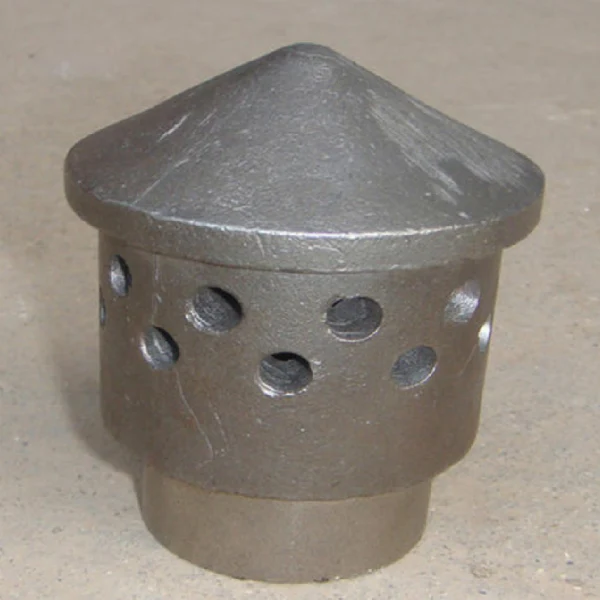
Steel Casting is a commonly used casting process for iron and steel products. It involves pouring molten steel into pre-set molds, followed by solidification and cooling to obtain steel castings with specific shapes, dimensions, and properties. Its core advantages lie in the ability to form complex structures and adapt to high-load conditions, making it a core production method for key basic components in the equipment manufacturing field.
Steel casting encompasses many specialized processes, such as: Steel Investment Casting, Steel Die Casting, Sand Mold Steel Casting, etc. Depending on the materials used in each process, steel products with different characteristics, functions, and levels of precision can be produced. Steel casting plays a vital, albeit often unnoticed, role in many different fields.
Main Classifications of Steel Casting
Design - Prototype - Molds - Casting
Supro Metal Foundry is China leading metal casting parts manufacturer, founded in 1997, with continuous upgrading of casting technology and replacement of advanced casting equipment, we have become an industry-leading casting enterprise, covering an area of 8,800 square meters, with three castings The workshop, a precision cnc machining and surface coating workshop, has 120 technical employees, 18 quality engineers, and 17 core company management. Provide stable metal casting parts supply projects for 3800+ purchasing companies from China and the world.
We specialize in metal castings with various complex structures, and use our rich knowledge of casting materials and casting experience to deliver high-quality metal casting parts to customers on time through professional casting techniques.
Whether rapid casting prototype or high volume casting, we can provide strong casting capabilities, including: product design and optimization, mold design and manufacturing, metal casting process, quality control, precision CNC machining, material and physical property testing, surface coating , as well as one-stop metal casting services such as packaging and transportation.
Carbon Steel Casting
Design - Prototype - Molds - Casting
Carbon Steel Casting has a carbon content of 0.06%~2.11%, containing no or only trace amounts of alloying elements. Carbon Steel Casting is categorized into low, medium, and high carbon types based on carbon content within steel casting.
Low-carbon Steel Casting (C≤0.25%) consists of ferrite and a small amount of pearlite, with total alloying elements ≤0.3%.
Medium-carbon Steel Casting (0.25%<C≤0.6%) consists of pearlite and ferrite (or a small amount of cementite), with Si and Mn content usually ≤1.0%.
High-carbon Steel Casting (C>0.6%) consists of pearlite and cementite, with carbide content increasing as carbon content rises.
Carbon Steel Casting is suitable for most engineering scenarios, and its relatively economical characteristics make it suitable for cost-priority projects.
Casting Type | Core Performance Focus | Typical Mechanical Properties (After Heat Treatment) |
Low-carbon Casting | Plasticity, Weldability, Toughness | Tensile Strength 300~450MPa, Elongation ≥20% |
Medium-carbon Casting | Comprehensive Mechanical Properties | Tensile Strength 400~600MPa, Impact Energy ≥30J/cm²
|
High-carbon Casting | Wear Resistance, Hardness | Brinell Hardness ≥250HBW, Wear Resistance 2~3 times that of Low-Carbon Steel |
Alloy Steel Casting
Design - Prototype - Molds - Casting
Alloy Steel Casting is produced by adding alloying elements like Cr, Ni, Mo, Mn, etc., to carbon steel. It is classified into low-alloy (total alloy content ≤5%), medium-alloy (5% < total alloy content ≤10%), and high-alloy (total alloy content > 10%) Steel Casting. Other elements can also be added to further enhance properties like strength and corrosion resistance.
The performance of Alloy Steel Casting is customizable; through multi-element synergy (e.g., Cr-Ni-Mo combination), properties such as strength, corrosion resistance, and heat resistance can be improved to suit extreme working conditions. Relying on high corrosion resistance, high strength, heat resistance, and wear resistance, Alloy Steel Casting is very suitable for manufacturing equipment in high-end fields (e.g., nuclear pressure vessels, crane slewing rings, metallurgical furnace base plates, etc.).
If higher corrosion resistance is required for alloy steel casting, then Stainless Steel Casting can be chosen. Stainless Steel Casting contains Cr≥12% (basic corrosion-resistant component), some grades contain Ni, Mo, such as Type 304 stainless steel (resistant to neutral corrosion) and Type 316L stainless steel (resistant to chloride ion corrosion). Stainless Steel Casting is widely used in corrosive environments.
Functional Type | Core Alloy Elements | Key Performance Indicators
|
Corrosion-Resistant | Cr≥12% (base), Mo 2%~3% (resists Cl⁻) | Neutral Salt Spray Corrosion Resistance ≥1000h no red rust
|
High-Strength | Ni 1%~3%, Mo 0.2%~0.5% | Tensile Strength ≥800MPa, Yield Strength ≥500MPa
|
Heat-Resistant | Cr 18%~25%, Ni 8%~12% | High-Temperature Strength at 1000℃ ≥100MPa, Oxidation Rate ≤0.1g/(m²・h) |
Wear-Resistant | Cr 12%~18%, C 1.0%~2.0% | Impact Wear Life is 3~5 times that of High-Carbon Steel |
Process Types of Steel Casting
Design - Prototype - Molds - Casting
Common process types for steel casting are divided into three types: Steel Investment Casting, Steel Die Casting, and Sand Mold Steel Casting. These three different steel casting processes are suited to different types of steel and can adapt to the production of steel products with different precision levels, structural complexities, production batches, and material types.
Steel Investment Casting
Steel Investment Casting, also known as lost-wax casting, involves creating a soluble wax pattern (dimensional tolerance controlled within ±0.1mm) replicating the shape of the casting, applying multiple layers of refractory coating to form a ceramic shell (ensuring shell refractoriness and permeability), removing the wax pattern, pouring molten steel into the shell, and breaking the shell after solidification to obtain the casting.
Steel Investment Casting is a mainstream process for precision steel casting. It can achieve dimensional tolerances of CT5-CT7 grade and surface roughness Ra≤6.3μm, requiring little or no subsequent machining. Steel Investment Casting is suitable for complex structures, thin walls (minimum wall thickness ≥1.5mm), and precision steel castings, such as aerospace turbine blades and medical device components.
Steel Die Casting
Steel Die Casting involves injecting molten steel at high pressure (typically 30~150MPa) and high speed into the cavity of a metal mold made from pre-hardened hot-work tool steel (e.g., H13). After rapid solidification (solidification time from seconds to tens of seconds), the mold is opened to remove the part. Steel Die Casting emphasizes mass production efficiency and is suitable for small and medium-sized, mass-produced structural components, such as automotive transmission gears.
The process flow of Stainless Steel Die Casting is consistent with Steel Die Casting. Its core feature is using high pressure to compensate for the poor fluidity of molten stainless steel, while relying on the high precision of metal molds to achieve near-net or net-shape production of castings. It is one of the key technical paths for batch manufacturing of stainless steel components.
However, in the Stainless Steel Die Casting process, due to the material characteristics of stainless steel (high melting point, high high-temperature strength, easy oxidation), attention must be paid to mold compatibility with high-temperature stainless steel, complete filling of the mold cavity with low-fluidity molten steel, and control of defects such as internal porosity and oxide inclusions. Stainless Steel Die Casting is suitable for high-temperature corrosion-resistant components, such as automotive exhaust system parts.
Sand Mold Steel Casting
Sand Mold Steel Casting uses quartz sand as aggregate and binders such as phenolic resin or sodium silicate.
A core box is made according to the pattern of the casting, and the sand mold is compacted using a molding machine, ensuring mold permeability ≥50mL/min and green compression strength ≥0.2MPa. After mold closing, molten steel is poured, and after solidification, the casting is obtained through shakeout and cleaning. It is the most widely used steel casting process (accounting for over 70% of industrial volume).
Sand Mold Steel Casting is mainly used for Carbon Steel Casting and is commonly used for manufacturing components like construction machinery bearing housings and pipeline flanges.
Process Type | Accuracy Grade | Production Batch | Suitable Steel Types
|
Steel Investment Casting | CT5-CT7 | Small/Medium Batch | Stainless Steel, High-Temp Alloys
|
Steel Die Casting | CT8-CT10 | Large Batch (≥10k pcs) | Carbon Steel, Low-Alloy Stainless
|
Sand Mold Steel Casting | CT10-CT12 | Small/Medium Batch | Carbon Steel, Med/Low-Alloy Steel |
Supro is a technical team specializing in researching and providing steel casting. We offer comprehensive customization from materials to process types. Regardless of the batch size for your steel product production, you can obtain a unique Custom Steel Casting Service from us. Please feel free to contact Supro’s online 24/7 technical customer service for an exclusive Custom Steel Casting Service.
Advantages of Steel Casting
Design - Prototype - Molds - Casting
Steel Casting is a key forming technology in the industrial manufacturing sector, capable of producing various steel components. Its advantages span multiple dimensions including material properties, process adaptability, structural realization, and application value. Steel Casting is a crucial foundational process for producing industrial machinery components in high-end fields such as heavy machinery, energy, and chemical processing.
Excellent Mechanical Properties: Steel Casting
Steel Casting offers excellent mechanical properties. Based on the flexible formulation of molten steel composition and subsequent heat treatment processes, steel casting possesses strong tunability to adapt to various working condition requirements. Steel Casting can produce performance-differentiated Steel Castings by adjusting carbon content, types and proportions of alloying elements according to industrial needs.
Carbon Steel Casting: With moderate carbon content (typically 0.15%-0.60%), Carbon Steel Casting offers a good combination of strength (tensile strength can reach 400-700MPa) and toughness, with controllable costs, making it suitable for load-bearing parts in general machinery (e.g., gears, bearing housings).
Alloy Steel Casting: By adding alloying elements such as chromium, nickel, molybdenum, manganese, etc., hardness, wear resistance, heat resistance, or low-temperature resistance can be significantly improved. For example, chromium-molybdenum steel castings can withstand temperatures above 500°C. Alloy Steel Casting is widely used in high-temperature pipelines for thermal power equipment.
Stainless Steel Casting: Relying on the passive film formed by chromium (content ≥10.5%) and nickel, Stainless Steel Casting possesses excellent corrosion resistance, performing stably in highly corrosive environments like chemical and food processing.
Coupled with heat treatment processes such as normalizing, tempering, and quenching, Steel Casting can further optimize the grain structure, enabling key mechanical indicators of the casting like yield strength, impact toughness, and fatigue life to precisely match working condition requirements, far exceeding the performance limits of other casting materials like cast iron.
Integrated Forming of Complex Components: Steel Casting
Design - Prototype - Molds - Casting
Steel Casting breaks through the limitations imposed on component structures by processes like machining and forging, enabling the integrated forming of complex geometric shapes. In the manufacturing of large, special-shaped key components, Steel Casting is an irreplaceable process for complex machinery manufacturing.
For components with internal complex channels or chambers (e.g., chemical reactor heads, pump impellers), Steel Casting can form the internal structure in one go through pre-placed sand core technology, avoiding stress concentration and leakage risks associated with welding and splicing.
For oversized, heavy components with uneven wall thickness (e.g., turbine runners for hydroelectric generator sets, crusher frames for mining machinery), Steel Casting can produce single castings weighing tens or even hundreds of tons through large sand molds or composite molds, greatly enhancing structural integrity and load-bearing stability.
For components integrating multiple features (e.g., flanges, sealing surfaces, and flow channel integrated structures of valve bodies), Steel Casting can integrate multiple functional features into a single casting, reducing part count and assembly steps, thereby lowering manufacturing costs and assembly errors.
High Precision: Steel Casting
Design - Prototype - Molds - Casting
Steel Casting is almost unrestricted by the size and weight of components, capable of stably producing everything from precision parts weighing a few grams to giant components weighing hundreds of tons. Through different specialized processes, steel casting can cover the entire size spectrum from precision parts to large components. This wide range of size and weight adaptability makes Steel Casting a universal forming technology across industries and scenarios.
Small Scale: Stainless steel precision gears and valve body components produced by Steel Investment Casting can weigh as low as 1-10g, with dimensional tolerances controlled within ±0.02mm, suitable for precision instruments and electronic equipment.
Medium Scale: Automotive chassis brackets and construction machinery arms produced by Carbon Steel Casting typically weigh between 50-500kg, balancing strength and machinability.
Large Scale: Nuclear pressure vessel heads and support structures for offshore platforms produced by Alloy Steel Casting can weigh over 100 tons individually, achieved through technologies like large electric arc furnace melting and large sand mold pouring.
Typical Application Fields of Steel Casting
Design - Prototype - Molds - Casting
Small or large industrial machinery produced through Steel Casting is ubiquitous in our lives. From the energy sector and manufacturing to industry and transportation, machinery produced by Steel Casting is a key casting process supporting the normal operation of these fields.
Energy Equipment Field
Energy equipment imposes stringent requirements on the mechanical properties, corrosion resistance, and reliability of Steel Casting. Whether in wind power or nuclear power, Alloy Steel Casting is a commonly used core process in the energy equipment field.
Main shafts for wind turbines (material ZG34CrNiMo) produced by Steel Casting need to withstand alternating loads transmitted from the blades, requiring tensile strength ≥650MPa and fatigue life ≥2×10⁷ cycles. Wind turbine hubs use low-alloy Steel Casting, with wall thickness distribution optimized through numerical simulation, achieving weight reduction of over 10%.
Pressure vessels for nuclear power (e.g., ZG13Cr2Mo1) need to withstand corrosion from high-temperature, high-pressure coolant. Steel Casting for these uses electric arc furnace and LF refining processes to ensure P(Phosphorus) and S(Sulfur) below 0.015%, requiring a 100% pass rate in non-destructive testing.
Construction Machinery Field
Construction machinery needs to cope with high-intensity operations like excavation, lifting, and loading. Component production for construction machinery primarily uses medium-carbon Alloy Steel Casting, with core requirements being high load capacity, impact resistance, and wear resistance.
Load-bearing components like excavator stick arms and crane slewing platforms often use medium-carbon alloy steel Steel Casting, such as ZG30CrMnSi Steel Casting. After quenching and tempering, the yield strength is ≥500MPa, allowing it to adapt to bending and impact loads under heavy-duty conditions.
Rail Transportation Field
Steel casting is a pivotal core process in the rail transportation field. Transportation equipment (high-speed rail, metro, heavy-haul railway) in this field has "high precision and high fatigue strength" as core requirements. Using Low-Alloy Steel Casting or Carbon Alloy Steel Casting can well meet these characteristics of high precision and high fatigue strength.
High-speed train bogie frames use ZG25MnNi Steel Casting. Precision sand casting ensures dimensional accuracy, and non-destructive testing (UT+MT) ensures no internal defects exceeding standards. The fatigue reliability under operating speeds of 350km/h reaches 10⁸ cycles, making it a key load-bearing component ensuring the safety of high-speed trains.
Mining Machinery Field
Mining machinery needs to cope with severe friction and impact during the processes of ore "mining, crushing, and conveying." Its Steel Casting primarily uses high-alloy wear-resistant steel. In the mining industry, the core requirement is to extend the service life of wear parts and reduce downtime maintenance costs. Using Steel Casting suitable for high-wear-resistant materials can well meet these core needs.
Liner plates for mining industry ball mills produced by Steel Casting use high-chromium alloy steel (Cr15Mo3). By controlling the morphology of carbides (distributed in granular form), wear resistance is enhanced, resulting in a service life 3~5 times longer than that of ordinary Carbon Steel Casting.
Conclusion
Design - Prototype - Molds - Casting
Steel Casting, by utilizing different material types and various specialized processes, can produce steel component parts with different metal properties, precision levels, and different batch sizes, profoundly impacting core machinery in multiple fields including energy equipment, construction machinery, rail transportation, and mining industry. If you are looking for a reliable partner team, why not try contacting us at Supro.
Supro is a technical team specializing in researching and providing Custom Steel Casting Service. We can provide one-stop service from material selection, process selection, to actual product production. You can customize your product production from start to finish. The Custom Steel Casting Service provided by Supro supports production of different batch sizes and offers the most cost-effective prices based on the batch size. Our technical team is online 24/7. Feel free to contact us at any time. Supro aims to provide you with the best Custom Steel Casting Service experience.